Soursop leaf1
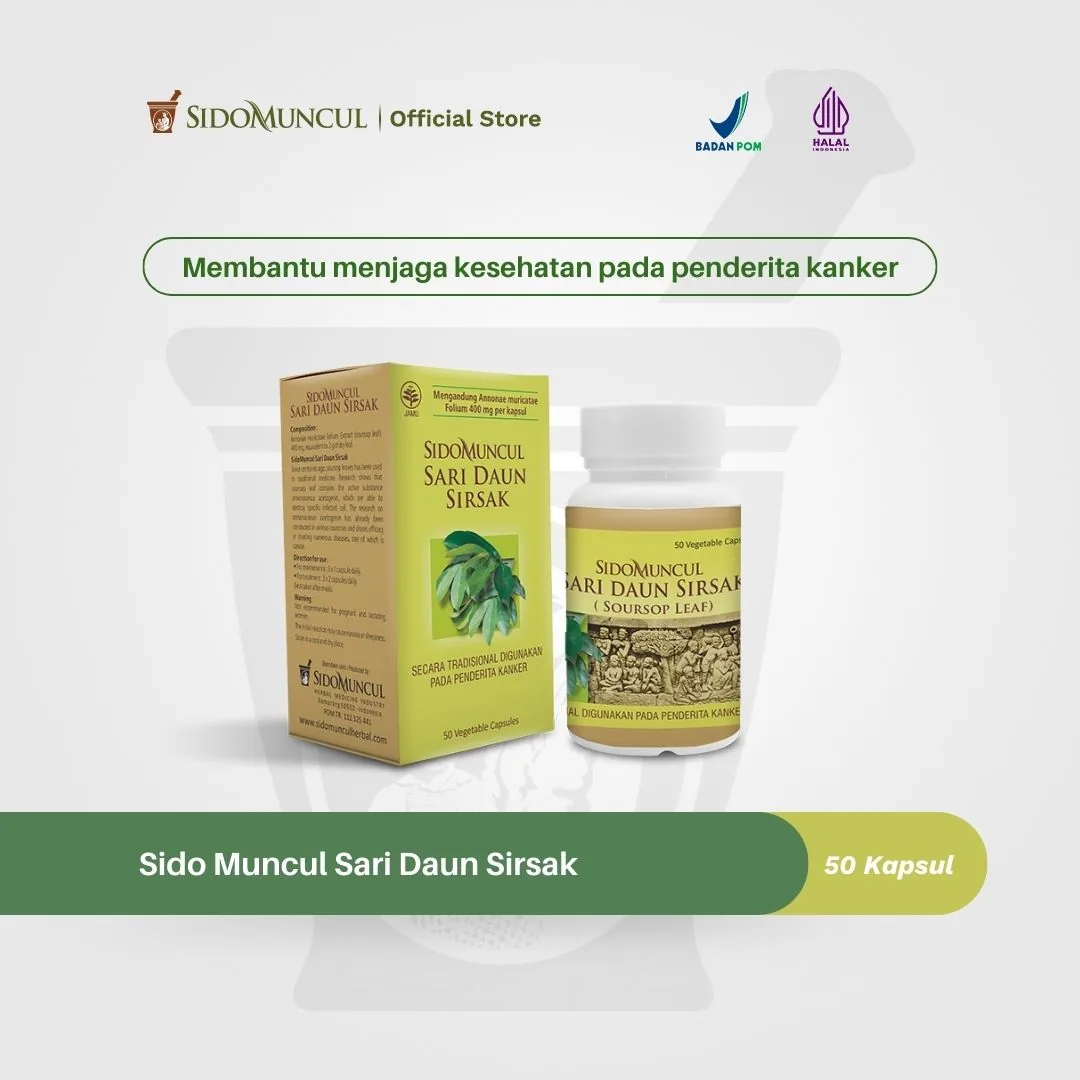
Annona muricata (Soursop/Sirsak) is a plant native to the United States with a tropical climate that has now spread to Asia, including Indonesia. Its fruit is widely enjoyed for its fresh taste, while its leaves are commonly used in traditional medicine, particularly to support the health of cancer patients.3
Morphology of Soursop Leaves
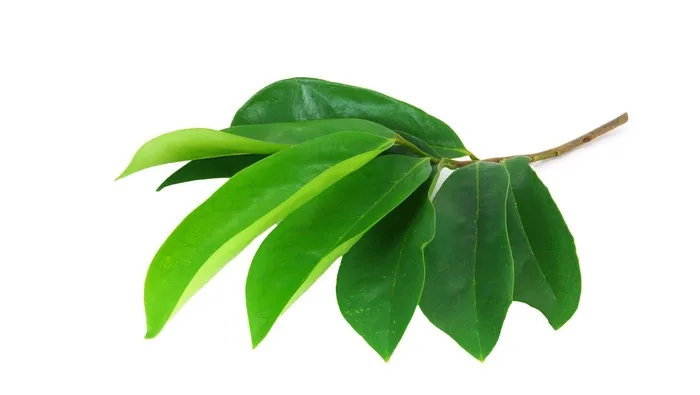
The leaves are oblong or elongated, with a pointed base, smooth margins that curve inward, and a tapering tip; they have pinnate venation, and the main veins are clearly visible.7 The smooth upper surface is dark green, while the underside is lighter in color.2
Soursop Leaves Active Compounds
The active compound in Soursop Leaves is known as acetogenin, including annocatacin, annomuricatin, annomuricin, and annomutacin.6
Health Benefits of Soursop Leaves
Anticancer
Acetogenin in Soursop leaves Acetogenins in Soursop leaves are potent at inhibiting energy production within cells. When a cell’s energy supply is depleted, this triggers apoptosis, or cell death. The effects of acetogenins are stronger on cancer cells than on normal cells because cancer cells require more energy.2,4 In addition, Soursop leaf extract can also suppress genes and proteins that promote cancer growth and spread.3Literature Study:
Subjects: 30 colorectal cancer patients who had undergone tumor resection.
Research dose: 300 mg/day of Soursop leaf water extract (containing 0.36% acetogenin (w/w) or 3.6 mg/g)
Duration: 8 weeks
Results: Soursop leaf extract exhibited higher cytotoxic effects compared to the placebo group. Some subjects undergoing chemotherapy reported feeling better while taking the Soursop leaf extract supplement, and one subject noted a reduction in abdominal discomfort and the urge to strain. No adverse effects, such as weight loss or reduced nutrient intake, were observed during supplementation with Soursop leaf extract.5
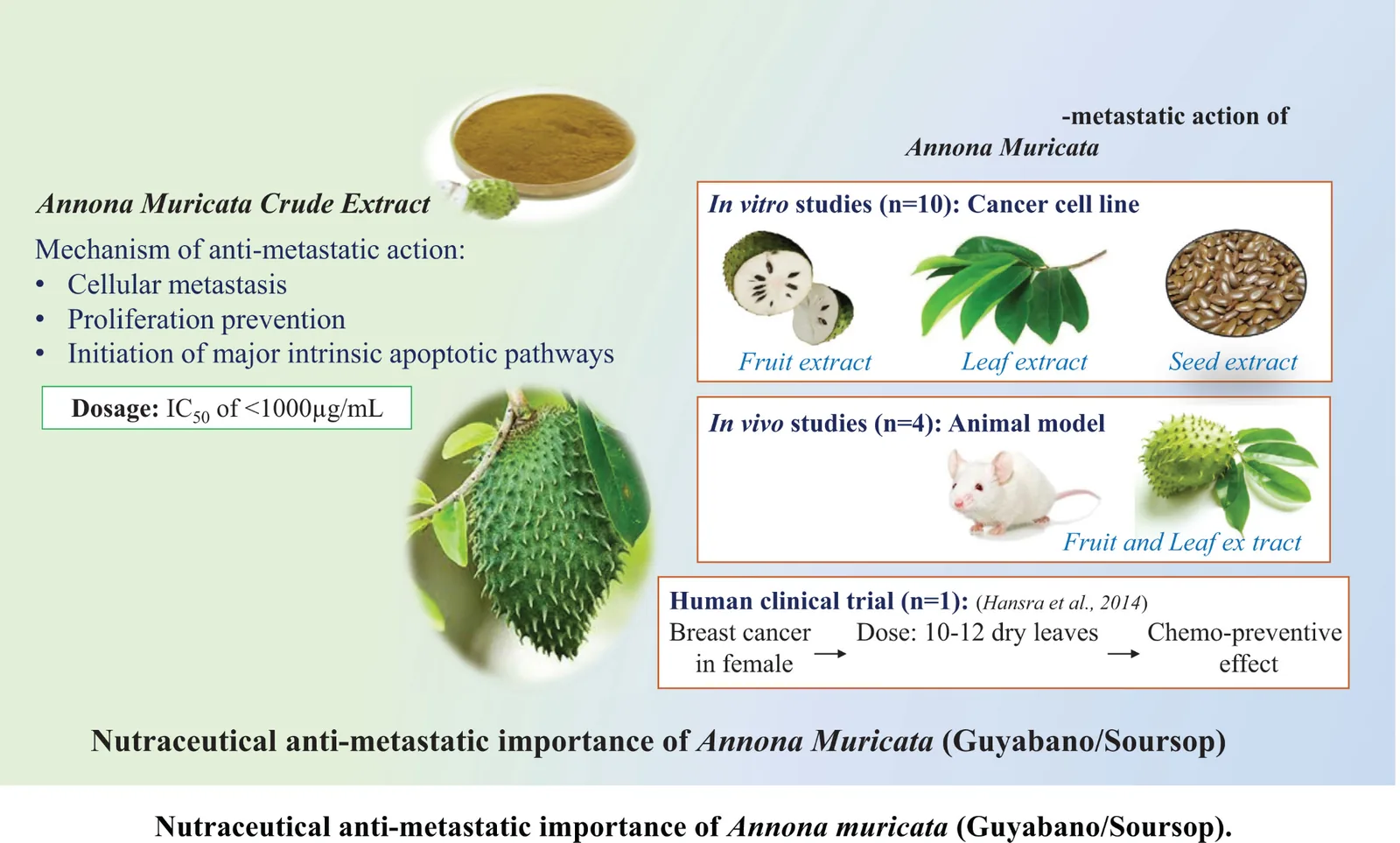
Soursop leaves as an anti-metastatic agent/prevent the spread of cancer cells.6
Case Study 1:
Colon cancer patients underwent a combination of lifestyle modifications and the intake of several herbal extracts and nutraceuticals, including daily consumption of 5 g of soursop leaf and seed extract powder. The results showed a loss of malignancy and a reduction in the size of colon tumor cells.4
Case Study 2:
In a breast cancer patient who had undergone various courses of chemotherapy and radiation therapy, the patient began taking 227 g of soursop leaf decoction (10–12 dried leaves steeped in water for 5–7 minutes) daily, along with capecitabine (2,500 mg orally) on a 2-week on, 1-week off schedule. As a result, the patients’ tumor markers became more stable, and no side effects were documented after 5 years of therapy.4
Hepatoprotective (Protects liver function)
There is an in vivo study in laboratory animals combining Soursop leaves with cancer treatment (Sorafenib) to prevent liver damage in diethylnitrosamine (DEN)-induced hepatoma (liver cancer).6Subjects: 29 rats weighing 160-180 grams induced liver damage
Treatment dose: Sorafenib + ethanol extract of Soursop leaves 50 & 100 mg/kgBW/day.
Duration: 2 weeks
Results: Soursop leaf extract at a dose of 100 mg/kgBW/day effectively reduced AST, ALT, and bilirubin levels, and demonstrated a hepatoprotective effect on liver damage scores in hepatoma rats receiving Sorafenib therapy. Soursop leaf extract has potential as a promising adjunctive therapy to reduce sorafenib-induced hepatotoxicity in the treatment of liver cancer.
Safety
Soursop leaves are listed in the Formularium Obat Herbal Asli Indonesia [Peraturan Menteri Kesehatan RI No. 6 Tahun 2016] and have been proven to be practically non-toxic through acute toxicity testing. In the formulary, Soursop Leaves are classified for palliative indications of cancer (breast cancer, ovarian cancer, adenocarcinoma of the colon, adenocarcinoma of the prostate, liver cancer, lung cancer, pancreatic cancer, malignant lymphoma).2 Soursop leaf extract is well-tolerated at relatively high doses (acute LD50 > 2000 mg/kg; subchronic administration is considered safe up to approximately 800 mg/kg in test mice).6
Keywords:Soursop; Annona muricata; Acetogenin; Anticancer; Hepatoprotective (Protects liver function)
References
Image: shutterstock.com
Ministry of Health of the Republic of Indonesia.Peraturan Menteri Kesehatan Republik Indonesia Nomor 6 Tahun 2016 tentang Formularium Obat Herbal Asli Indonesia. Ministry of Health; 2016.
Ilango S, Sahoo DK, Paital B, et al. A Review on Annona muricata and Its Anticancer Activity. Cancers (Basel). 2022;14(18):4539. doi:10.3390/cancers14184539.
Abdul Wahab SM, Jantan I, Haque MA, Arshad L. Exploring the Leaves of Annona muricata L. as a Source of Potential Anti-inflammatory and Anticancer Agents. Front Pharmacol. 2018;9:661. doi:10.3389/fphar.2018.00661.
Indrawati L, Ascobat P, Bela B, Abdullah M, Surono IS. The effect of anAnnona muricata leaf extract on nutritional status and cytotoxicity in colorectal cancer: a randomized controlled trial. Asia Pac J Clin Nutr. 2017;26(4):606-612. doi:10.6133/apjcn.062016.02.
Susilaningsih N, Prajoko YW, Budijitno S, et al. Soursop Leaf Extract Reduces AST, ALT, Bilirubin Levels, and Liver Damage Scores in Sorafenib-treated Wistar Rats with Hepatocellular Carcinoma. The Indonesian Biomedical Journal. 2026; 18(1):36-44.
Kementerian Kesehatan Republik Indonesia. Farmakope Herbal Indonesia Edisi II. Kementerian Kesehatan RI; 2017.