Saw Palmetto1
Serenoa repens fruit (Saw Palmetto) is a type of small palm tree that grows in the southeastern United States, and its fruit has been used as an herbal remedy. Saw Palmetto berries have traditionally been used by Native Americans to treat urinary tract disorders, relieve mucosal irritation, and improve testicular function. Based on various studies, Saw Palmetto is primarily known for helping to reduce symptoms of benign prostatic hyperplasia (BPH) by reducing inflammation and prostate growth.2
Morphology of Saw Palmetto
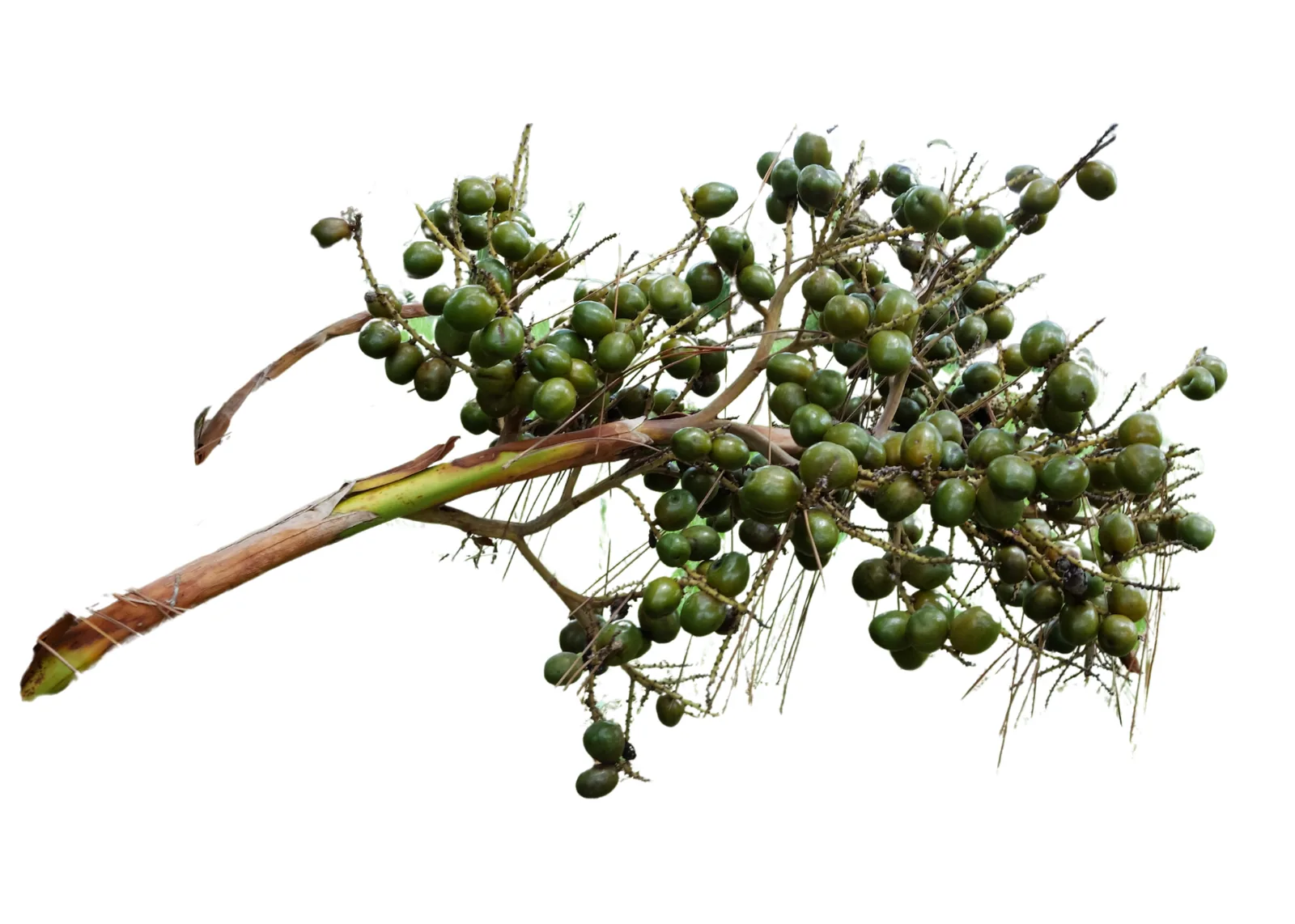
The fruit is egg-shaped or nearly round, with a rough, wrinkled surface that is dark brown to blackish color when fully ripe, and has a slight coppery sheen. It can reach a length of 2.5 cm and a diameter of 1.5 cm. The outer layer of the fruit (epicarp) and the flesh (mesocarp) are very thin and easily peeled away, revealing a thin, hard, pale brown, fibrous inner layer (endocarp).5
Saw Palmetto Active Compounds
Saw palmetto extract consists primarily of fatty acids (such as lauric and myristic acids) and phytosterols, which account for most of its health benefits, particularly in supporting prostate health, especially in cases of benign prostatic hyperplasia (BPH).2
Health Benefits of Saw Palmetto
Saw palmetto helps prevent prostate enlargement by reducing inflammation in prostate tissue (anti-inflammatory) and decreasing the production of dihydrotestosterone (DHT), a hormone that stimulates prostate growth, thereby maintaining normal prostate size and function.2 Excess DHT is also known to trigger hair follicle shrinkage in cases of androgenetic alopecia (AGA) or male-pattern hair loss in men and women.4
BPH Literature Study:
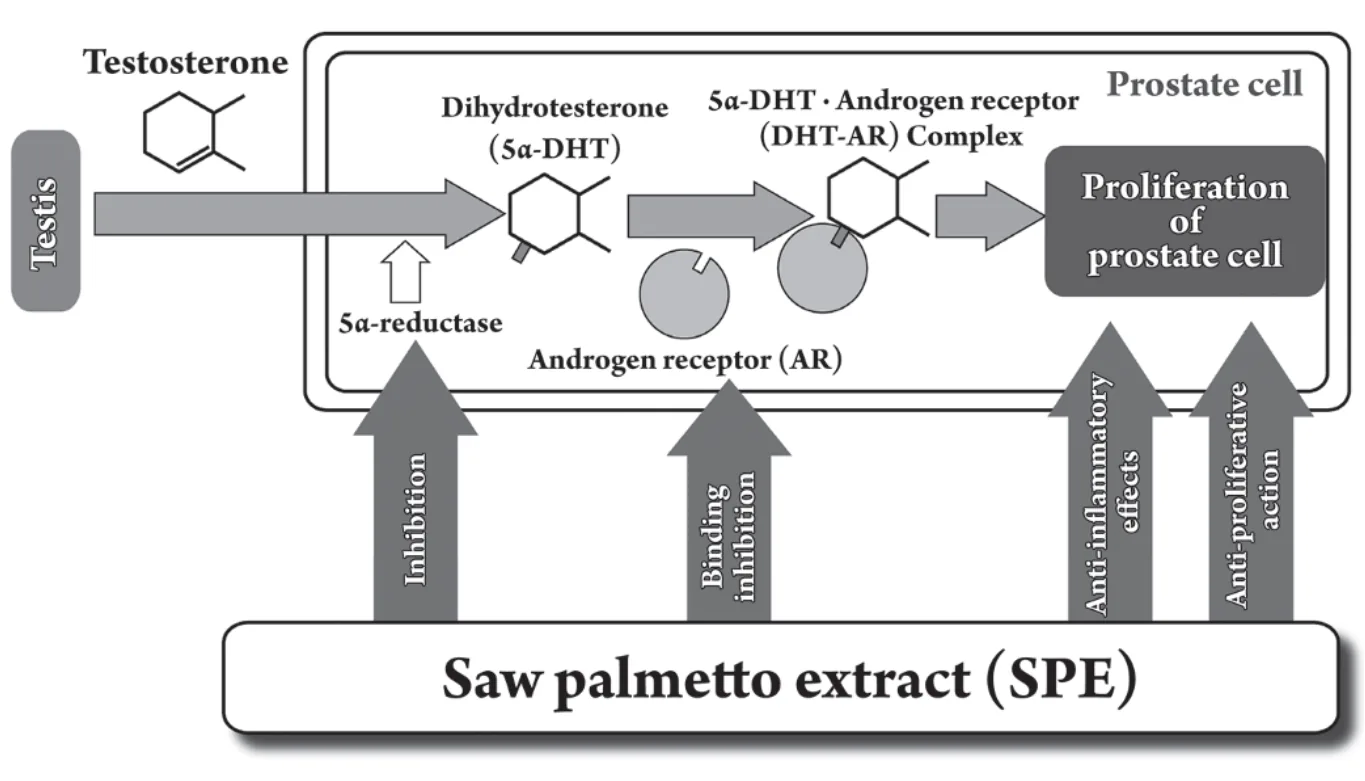
Mechanism of action of Saw Palmetto extract2
Subjects: 225 men with lower urinary tract symptoms and BPH.
Study dosage: Profluss tablets (containing 320 mg of saw palmetto extract, 50 mcg of selenium, and 5 mg of lycopene) + placebo (Group A), 0.4 mg of tamsulosin + placebo (Group B), or Profluss tablets + 0.4 mg of tamsulosin (Combination Group).
Duration: 12 months
Results: The combination group of Saw Palmetto, lycopene, selenium, and tamsulosin was more effective in managing BPH based on the International Prostate Symptom Score (IPSS) and improved maximum urinary flow rate.3
Literature Study Hormonal baldness:
Subjects: 880 adults (ages 8–50) with mild-to-moderate AGA (androgenetic alopecia)
Dosage: 100 mg of saw palmetto oil per day (standardized to 2–3 g of β-sitosterol)
Duration: 16 weeks
Results: Hair loss decreased by up to 29%, hair density increased by 5–7%, and serum DHT levels decreased significantly. No serious side effects were reported.4
Safety
Based on the results of the literature review, no side effects were reported in the clinical studies conducted. Saw Palmetto is relatively safe and was well tolerated by all study participants.3
Keywords: Serenoa repens; Saw Palmetto; Prostate Health; Dihydrotestosterone; Androgenetic Alopecia; Hormonal Baldness; Urinary Tract Health
References
Gambar: shutterstock.com
Suzuki M, Ito Y, Fujino T, et al. Pharmacological effects of saw palmetto extract in the lower urinary tract. Acta Pharmacol Sin. 2009;30(3):227-281. doi:10.1038/aps.2009.1
Morgia G, Russo GI, Voce S, et al. Serenoa repens, lycopene and selenium versus tamsulosin for the treatment of LUTS/BPH. An Italian multicenter double-blinded randomized study between single or combination therapy (PROCOMB trial). Prostate. 2014;74(15):1471-1480. doi:10.1002/pros.22866.
Sudeep HV, Rashmi S, Jestin TV, Richards A, Gouthamchandra K, Shyamprasad K. Oral and Topical Administration of a Standardized Saw Palmetto Oil Reduces Hair Fall and Improves the Hair Growth in Androgenetic Alopecia Subjects - A 16-Week Randomized, Placebo-Controlled Study. Clin Cosmet Investig Dermatol2023;16:3251-3266. doi:10.2147/CCID.S435795