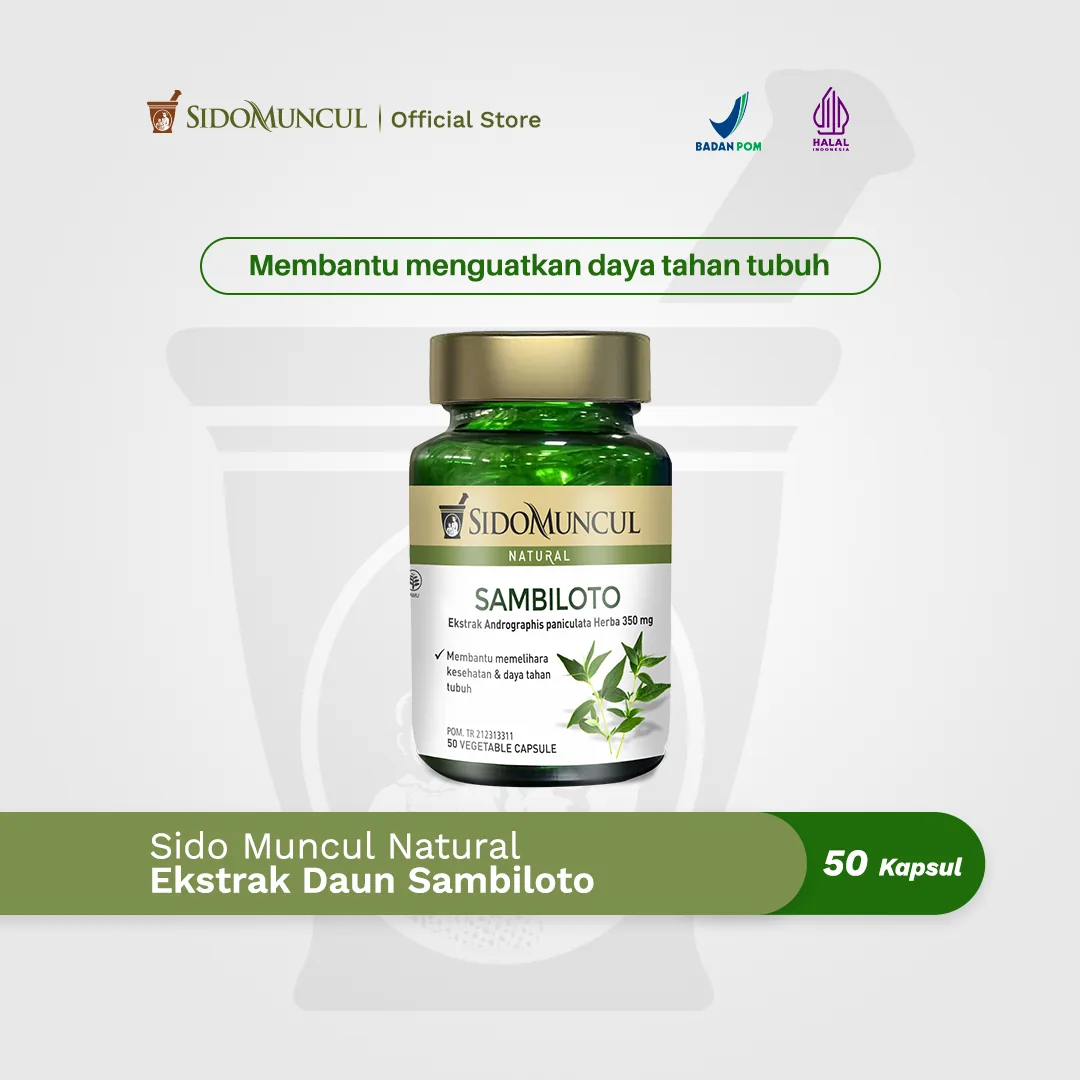
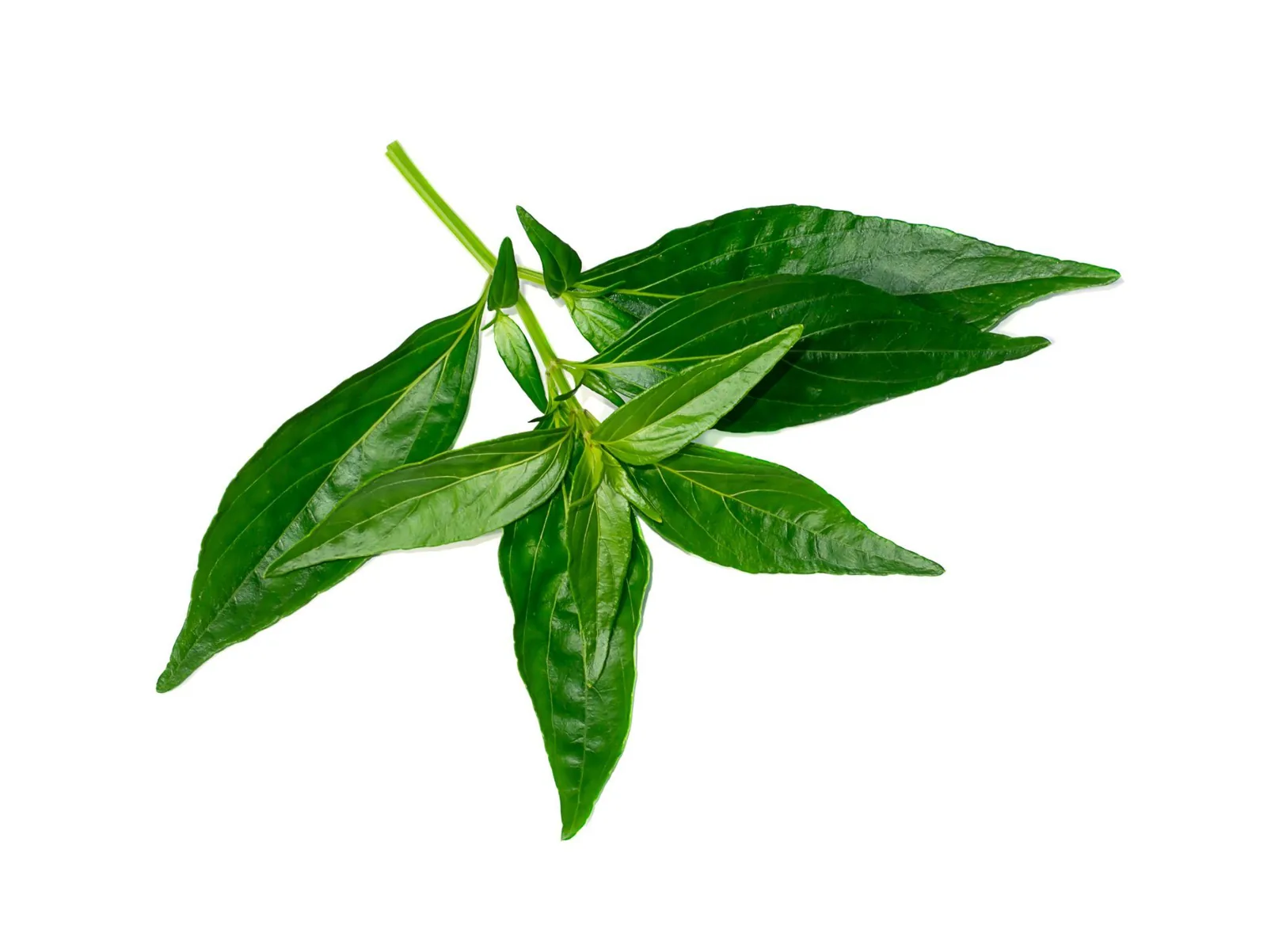
Sambiloto1
Andrographis paniculata (Sambiloto) is one of the medicinal plants widely used in Southeast Asia. The sambiloto herb was first introduced into the Chinese Pharmacopoeia in 1977. The part of the sambiloto plant that is generally used as medicine is the root (aerial) / all parts that grow above ground, including stems and leaves.5 In traditional Chinese and Indian medicine, Sambiloto is widely used to help maintain health, Sambiloto is widely used to support overall health, particularly in boosting the immune system, as an antipyretic (fever reducer), maintaining upper respiratory health, and helps the body defend against infections.2
Morphology of Sambiloto
Consists of stems, leaves, flowers, fruits, and seeds. The stems are hairless (glabrous) and typically 4-sided. The leaves are dark green or brownish-green, ovate-lanceolate, brittle, thin, glabrous, the base of the leaf is pointed, the edges are flat, the tips are pointed to tapered. The fruit is square, oblong in shape, the base and tip are sharp, dark green to brownish-green. The seeds are light brown in color and hard with bumps.9
Sambiloto Active Compounds
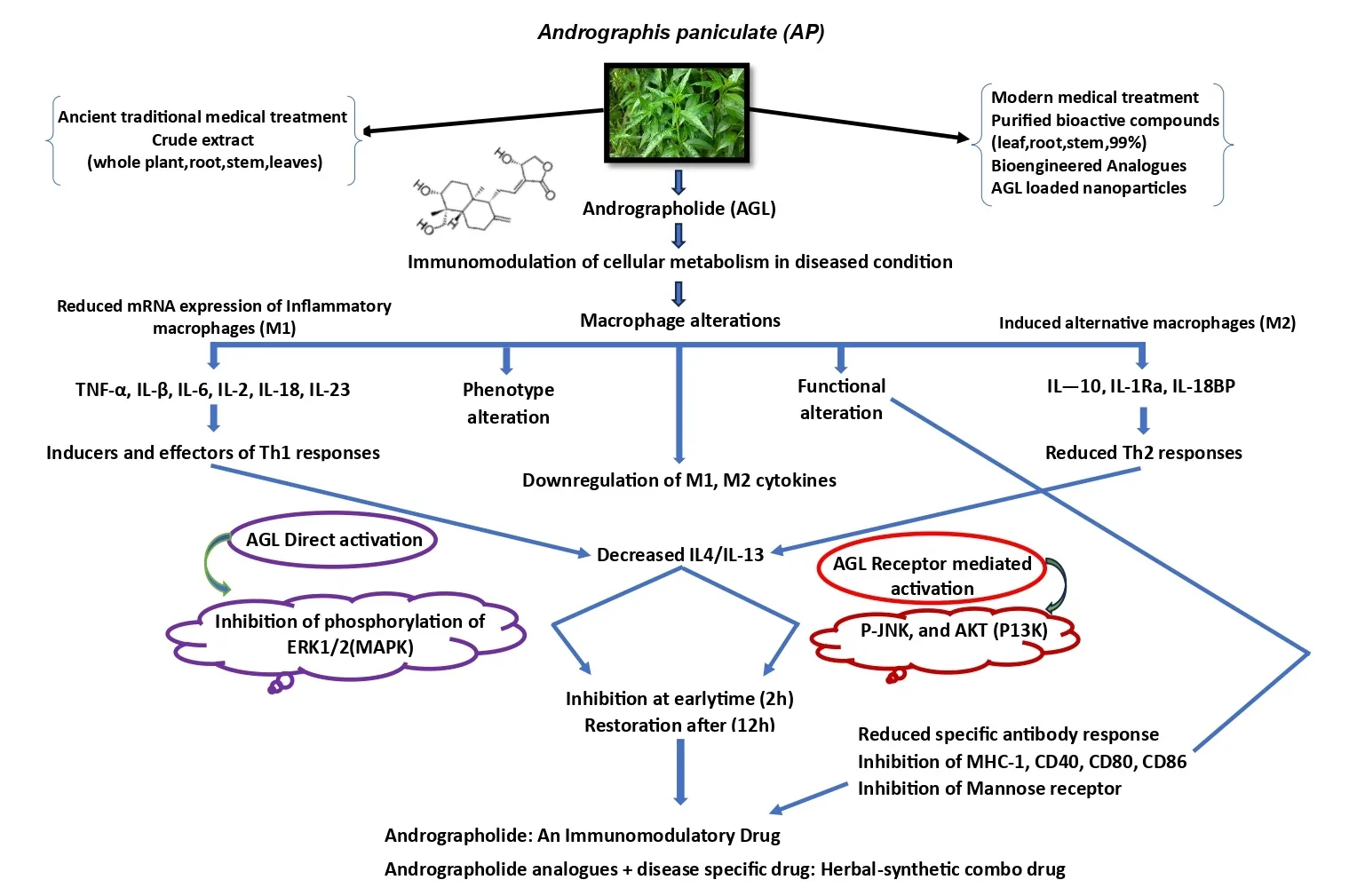
Sambiloto contains active compounds from the diterpene lactone group (more than 20 types of andrographolides), glycosides, flavonoids (more than 20 compounds), sesquiterpene lactones, and polyphenols.2
Health Benefits of Sambiloto
Maintaining immunity
Based on research that was conducted mostly in India and China, has shown that Sambiloto can stimulate the immune system and overcome poisoning. Andrographolide helps maintain the body's immune system by influencing immune cells such as macrophages and antibody production. Andrographolide can also relieve inflammation and affect substances that play a role in allergic reactions and infections.4Literature study:
Subject: 30 people aged 18–60 years
Research dose: Sambiloto extract 200mg/day
Duration: 30 days
Results: Consuming Sambiloto extract can increase the number of immune cells in the body. In addition, Sambiloto extract also helps regulate the immune response to prevent an excessive reaction once the infection has subsided.3
Maintaining upper respiratory health
In China, Sambiloto is listed in the Pharmacopoeia of the People's Republic of China and is indicated for influenza accompanied by fever, sore throat, acute and chronic cough, and other infectious diseases. Sambiloto has anti-inflammatory activity associated with immune modulation, antibacterial, and antiviral properties. These three activities are considered to help relieve upper respiratory tract infections with symptoms such as colds, coughs, and sore throats.2Literature study:
Subjects: 223 patients with mild upper respiratory tract infections.
Research dose: Sambiloto extract 200 mg/day (contains 60 mg Andrographolide)
Duration: 5 days
Results: Sambiloto extract was effective in reducing symptoms such as cough, runny nose, sore throat, fever, and fatigue. Significant improvement was seen on day 5 compared to the placebo group, with a total effectiveness rate 2.1 times higher. Six respondents experienced mild side effects, such as vomiting, hives, and diarrhea.2
Antipyretic/Fever reducer
Sambiloto helps reduce fever by blocking the body's internal signals that trigger an increase in temperature (such as prostaglandins and inflammatory cytokines), and by reducing inflammation that occurs in the body.6Literature study:
Subjects: 152 adults suffering from tonsillitis & pharyngitis.
Research dose: Dried sambiloto (6 g/day)
Duration: 3 days
Results: Therapy with Sambiloto for 3 days was as effective as paracetamol in reducing fever and reducing sore throat.7
Anti-inflammatory
Sambiloto extract can inhibit the activation of inflammatory signals such as NF-κB, thereby reducing the expression of pro-inflammatory genes. Studies have been conducted on mice with sepsis induced by lipopolysaccharide (LPS) injection.
Giving Sambiloto extract at doses of 200, 400, and 500 mg/kg body weight per day was shown to have anti-inflammatory effects on the livers of rats with LPS-induced sepsis. In the groups given the extract, even though they were still exposed to lipopolysaccharide, the liver tissue showed no signs of damage in the form of fat accumulation (fatty degeneration) or cell death (necrosis). These results indicate that Sambiloto extract helps protect the liver by preventing excessive fat accumulation, which can trigger tissue damage in sepsis.
Safety
Sambiloto is listed in the Formularium Obat Herbal Asli Indonesia (Permenkes No. 6 of 2016) with indications as an analgesic, antipyretic, palliative, and supportive agent, as well as for the treatment of gastroenteritis and acute respiratory tract infections. Subchronic safety data in the formulary indicate that Sambiloto leaves do not cause toxic effects on liver and kidney function in experimental animals.7
Keywords: Sambiloto; Andrographis paniculata; Andrographolide; Maintains Immunity; Fever Reducer; Respiratory Health
References
Image: shutterstock.com
Wagner, Hildebert & Ulrich-Merzenich, Gudrun. Evidence and Rational Based Research on Chinese Drugs. Springer Wien; 2013. ISBN 978-3-7091-0441-5.
Rajanna M, Bharathi B, Shivakumar BR, et al. Immunomodulatory Effects of Andrographis paniculata extract in healthy adults - An open-label study. Journal of Ayurveda and Integrative Medicine. 2021: 529-534. doi:10.1016/j.jaim.2021.06.004.
Mishra A, Shaik HA, Sinha RK, Shah BR. Andrographolide: A Herbal-Chemosynthetic Approach for Enhancing Immunity, Combating Viral Infections, and Its Implication on Human Health. Molecules, 2021; 26 (7036). doi:10.3390/molecules26227036.
Chevallier A. Encyclopedia of Herbal Medicine. 3rd Edition. DK Publishing; 2016. ISBN: 978-1-4654-4981-8.
Ilmi H, Pamungkas IR, Tumewu L, Hafid AF, Widyawaruyanti A. Analgesic and Antipyretic Activities of Ethyl Acetate Fraction Tablet of Andrographis paniculata in Animal Models. Evid Based Complement Alternat Med. 2021:8848797. doi:10.1155/2021/8848797.
Ministry of Health of the Republic of Indonesia. Regulation of the Minister of Health of the Republic of Indonesia Number 6 of 2016 concerning the Indonesian Indigenous Herbal Medicine Formulary. Ministry of Health RI; 2016.
Sumiyati, Prajoko YW, Karlowee V, Setyawan NA, Susilaningsih N, Widyastiti NS. The Potential Role of Andrographis Paniculata Against Sepsis by Inhibiting NF-KB P65 and iNOS in Lipopolysaccharide-Induced Rat Model. Azerbaijan Medical Journal. 62(07); 2022: 3037-3052.
Ministry of Health of the Republic of Indonesia. Indonesian Herbal Pharmacopoeia, 2nd Edition. Ministry of Health RI; 2017.