Noni1
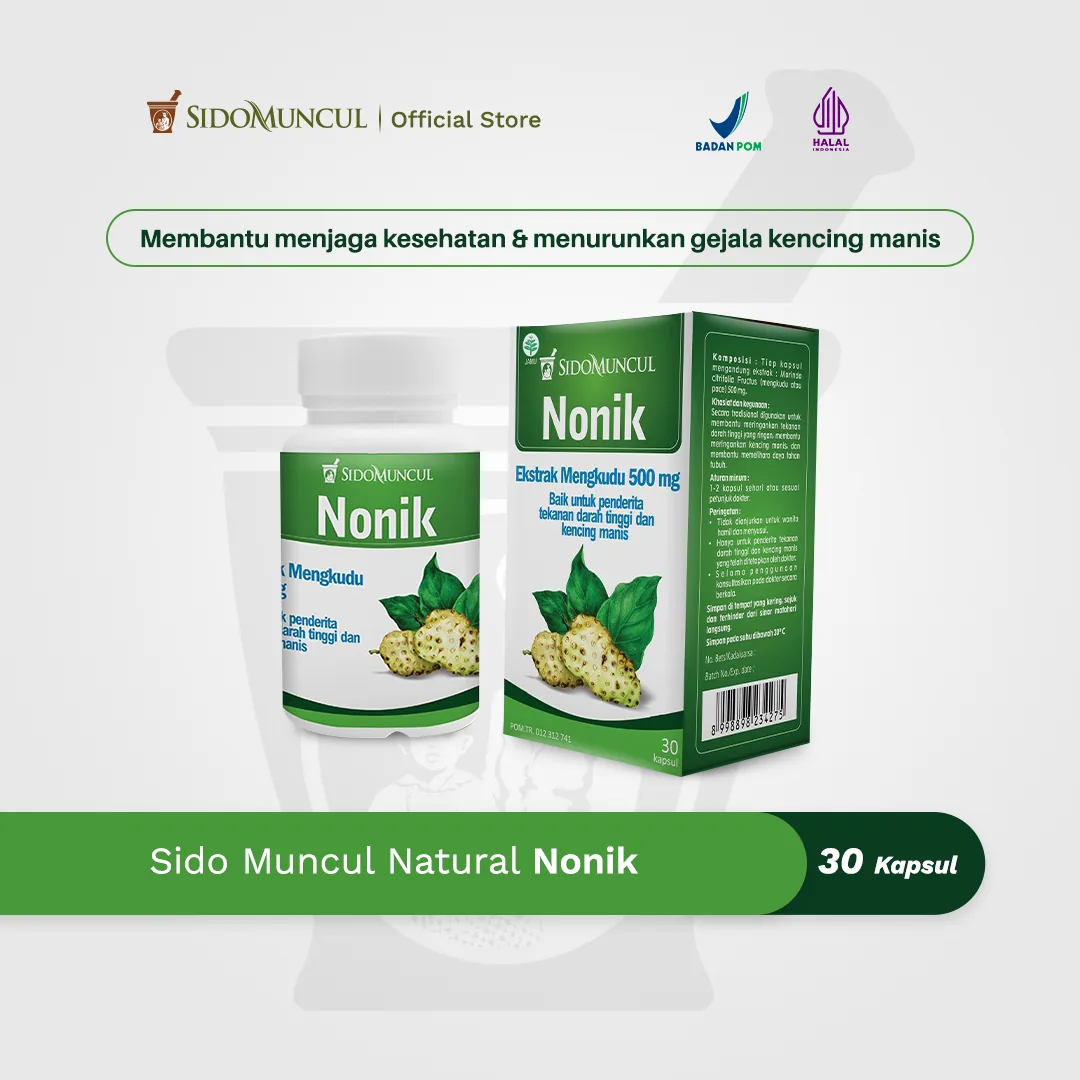
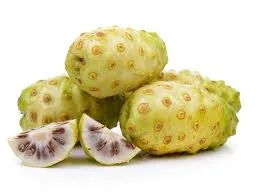
Morinda citrifolia Fruit Noni, or Mengkudu (in English called Noni), is a plant commonly found on islands in the Pacific Ocean, including Indonesia.2 Traditionally, noni fruit has been used as a diuretic, laxative, emmenagogue (to stimulate menstruation), treatment for arthritis, and for internal organ ailments. In traditional medicine, the parts used are administered raw, as juice or an infusion, or in ointments and poultices. When ripe, the fruit has a distinct, unpleasant odor resembling rotten cheese.6 One of the most extensively studied benefits of noni fruit is its potential as an antidiabetic agent.
Morphology of Nonik
The noni tree grows to a height of 4–8 m, with a round, woody trunk and rough bark; the cross-section of young stems is square and yellowish-brown. The fruit is a drupe with an irregular surface marked by seed protrusions; the fleshy pulp is 5–10 cm long and yellowish-green. The seeds are hard, triangular, and reddish-brown.3
Nonik Active Compounds
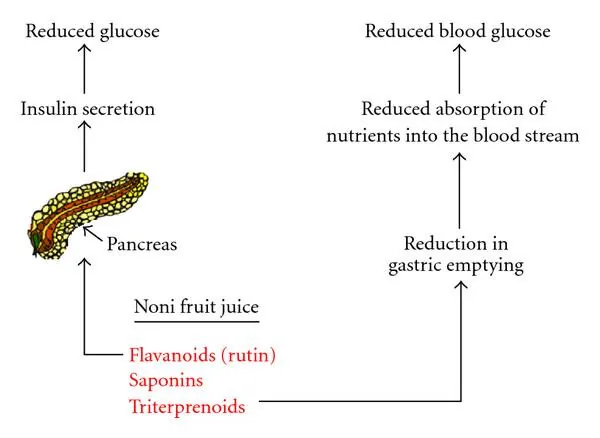
Noni fruit contains active saponin compounds that help lower blood sugar levels by slowing the absorption of food into the bloodstream. This keeps blood sugar and insulin levels stable after meals. Other compounds, such as triterpenoids, flavonoids, and polysaccharides, enhance insulin function, allowing the body’s cells to absorb glucose more effectively. Noni can also lower levels of “bad” cholesterol (LDL) and triglycerides.
The mechanism of the hypoglycemic effect of Noni fruit.2
Health Benefits of Noni
Noni fruit is beneficial not only for controlling blood sugar but also for supporting overall metabolic health.2,3
Literature Study:
Subjects: 20 patients with diabetes
Research dose: Noni fruit juice (2 ml per kg body weight per day)
Duration: 8 weeks
Results: There was a significant reduction in fasting blood sugar levels and HbA1c. Noni juice also increased the body’s natural insulin production, improved cholesterol levels, and reduced signs of inflammation. These results suggest that Noni could serve as an adjunct therapy to support treatment and diet in patients with type 2 diabetes.4
Safety
A Phase I clinical trial involving 29 patients was conducted to assess the toxicity and maximum dose of noni fruit extract. Participants took 500 mg capsules of the extract daily for 28 days, starting with a dose of 2000 mg and gradually increasing to 10 g per day. The results showed that the noni capsules were well tolerated at all doses. No significant side effects were observed during the study.5
Keywords: Morinda citrifolia; Noni; Antidiabetic; Anticholesterol; Arthritis
References
Image: pngtree.com
Nayak BS, Marshall JR, Isitor G, Adogwa A. Hypoglycemic and Hepatoprotective Activity of Fermented Fruit Juice of Morinda citrifolia (Noni) in Diabetic Rats. Evid Based Complement Alternat Med. 2011; 875293. doi:10.1155/2011/875293.
Ministry of Health of the Republic of Indonesia.Regulation of the Minister of Health of the Republic of Indonesia Number 6 of 2016 concerning the Formulary of Original Indonesian Herbal Medicines. Ministry of Health of the Republic of Indonesia; 2016.
West BJ , Uwaya A , Isami F , et al. The influence of Noni Fruit Juice on Immune System Function. Journal of Biosciences and Medicines. 2023; 11: 241-260. doi: 10.4236/jbm.2023.1112019.
West BJ, Jensen CJ, Westendorf J, White LD. White. A Safety Review of Noni Fruit Juice. Journal of Food Science. 2006; 71(8): 100 - 106. doi: 10.1111/j.1750-3841.2006.00164.x.