Licorice1
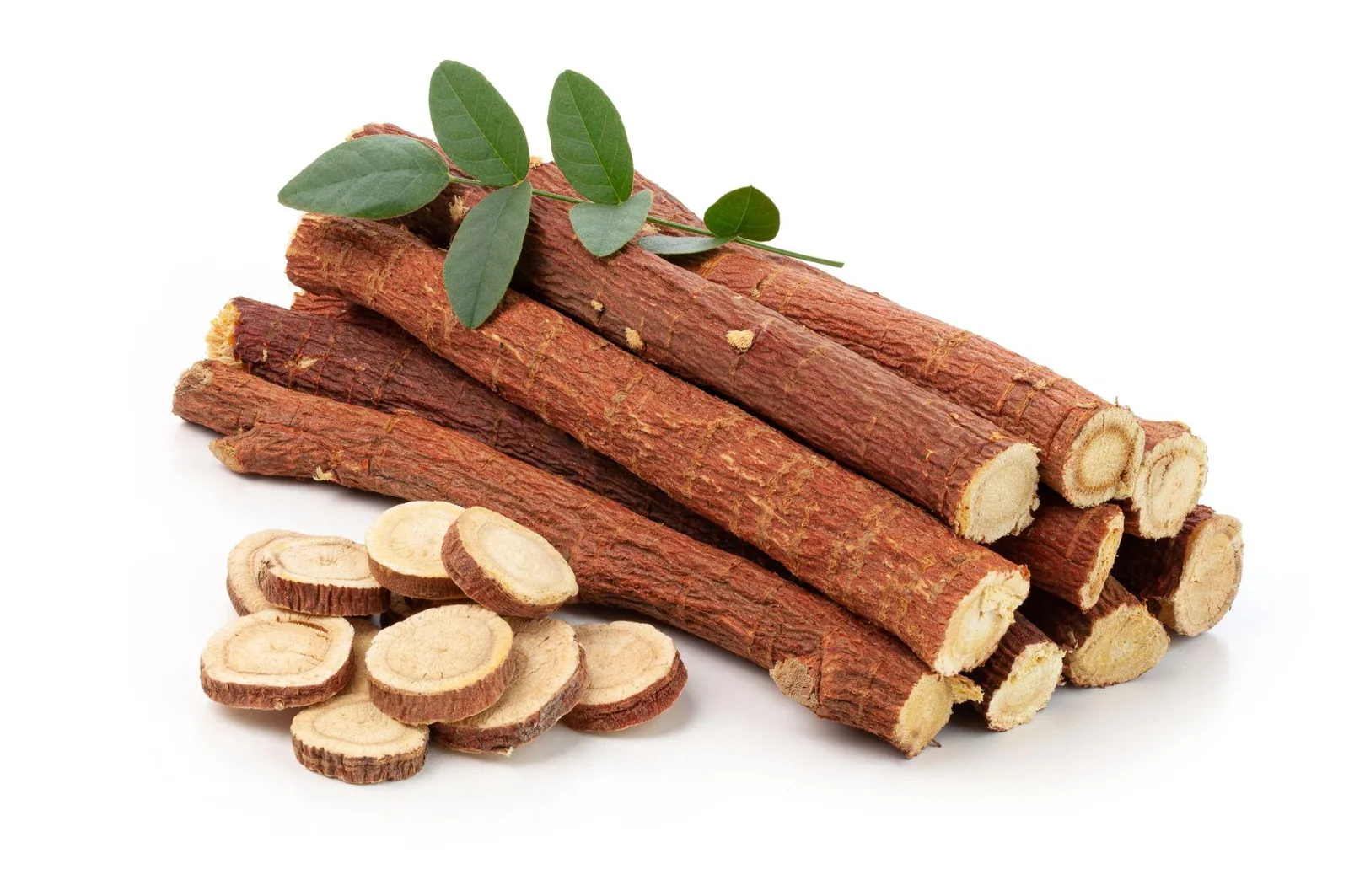
Glycyrrhiza glabra Radix (Licorice) is often also called Sweet Root because it has a sweet taste. The history of licorice use dates back to before Greek and Roman times. Practitioners of both Western and ancient Chinese traditional medicine used licorice to relieve a variety of ailments, including digestive disorders.5
Morphology of Licorice
The licorice plant is a wild herb that grows to a height of 50–125 cm. It has branches bearing purple to blue flowers, small leaf stalks, and compound sepals with glandular pustules; the petals are not fused, and the upper part is beak-shaped, while the fruit is long and leg-shaped. It has a long rhizome and a thin stem; the main root branches extend underground to a depth of over 1 meter, and branches from the main root form horizontal stems up to 180 cm in length.6
Licorice Active Compounds
It contains the triterpenoid glycoside glycyrrhizin (also known as glycyrrhizic acid) as its primary active ingredient, with concentrations ranging from 1% to 24% depending on the source and testing method.3
Health Benefits of Licorice
Licorice helps protect the stomach by increasing the production of protective mucus on the stomach lining. Additionally, licorice stimulates the release of a natural substance (secretin) that helps prevent and heal stomach ulcers. 2,3
Literature Study:
Subjects: 20 respondents with a history of gastritis/stomach pain (age 21-60 years)
Research dosage: Licorice powder 2 grams 3x daily
Duration: 2 weeks
Results: Licorice is effective in significantly reducing all symptoms in gastritis sufferers including fatigue, belching with a bitter or sour taste, burning sensation in the chest and throat.4
Safety
Based on the results of a literature review, licorice has been shown to be effective and safe in humans at moderate doses without causing significant side effects.4 Licorice extract and glycyrrhizin have been approved for use in food by the FDA, the European Council, and the Joint FAO/WHO Expert Committee on Food Additives. Licorice has also been included in the Generally Recognized as Safe (GRAS) list.5
Keywords: Glycyrrhiza glabra; Licorice; Glycyrrhizin; Digestive Health; Gastric Protection; Gastric Ulcers
References
Image: shutterstock.com
Heber, D, Joerg G, Thomas B, Christof J.Physicians Desk Reference (PDR) for Herbal Medicines. 4th edition. Thomson Healthcare; 2007. ISBN 1-56363-678-6.
Khan IA, Abourashed EA. Leung's Encyclopedia of Common Natural Ingredients: Used in Food, Drugs and Cosmetics. 3rd Edition. Wiley Publisher; 2014. ISBN 9881607418.
Schulz RM, Ahuja NK, Slavin JL. Effectiveness of Nutritional Ingredients on Upper Gastrointestinal Conditions and Symptoms: A Narrative Review. Nutrients. 2022;14(3):672. doi:10.3390/nu14030672.
Isbrucker, RA., et al.Risk and safety assessment on the consumption of Licorice root (Glycyrrhiza sp.), its extract and powder as a food ingredient, with emphasis on the pharmacology and toxicology of glycyrrhizin. Regulatory Toxicology and Pharmacology. 2006; 46 (3): 3: 167-192.