
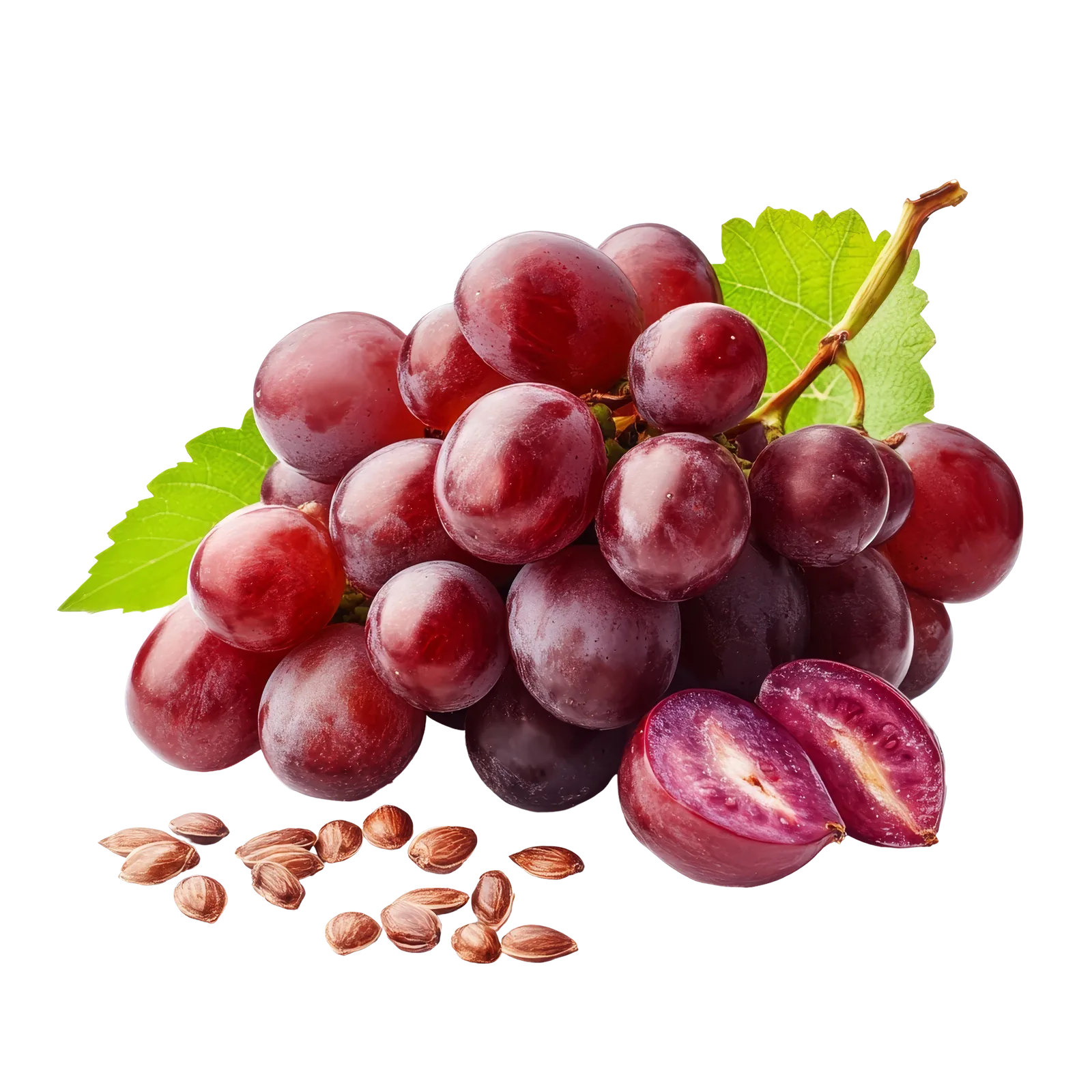
Grape Fruit & Seeds1
Vitis vinifera (Grape/Anggur) is a popular fruit. When consuming grapes, the seeds are often discarded, even though grape seeds offer significant health benefits. Grape seeds have the highest concentration of antioxidant bioactive compounds compared to other grape parts.2 Grape seeds have traditionally been used to address conditions related to the heart and blood vessels, high cholesterol, and poor blood circulation.10
Morphology of Grape
The grapes are round to oval in shape, about 6–25 mm long, and vary in color from deep purple to red, green, or yellow. They are juicy and taste sweet or tart. Each grape contains 3–4 seeds, which are shaped like small pears.
Grape Seed Active Compounds
Grape Seeds Grapes contain powerful antioxidants, particularly proanthocyanidins, which play a vital role in protecting body cells from free radical damage. Approximately 30% of total proanthocyanidins are found in grape seeds and 15% in the skin.2
Health Benefits of Grape Seeds
Antioxidants
Proanthocyanidins provide broader protection against free radicals. Their antioxidant activity has been shown to be approximately 20 times stronger than vitamin E and 50 times stronger than vitamin C, making them one of the most effective bioactive compounds for protecting the body’s cells and tissues from oxidative damage.3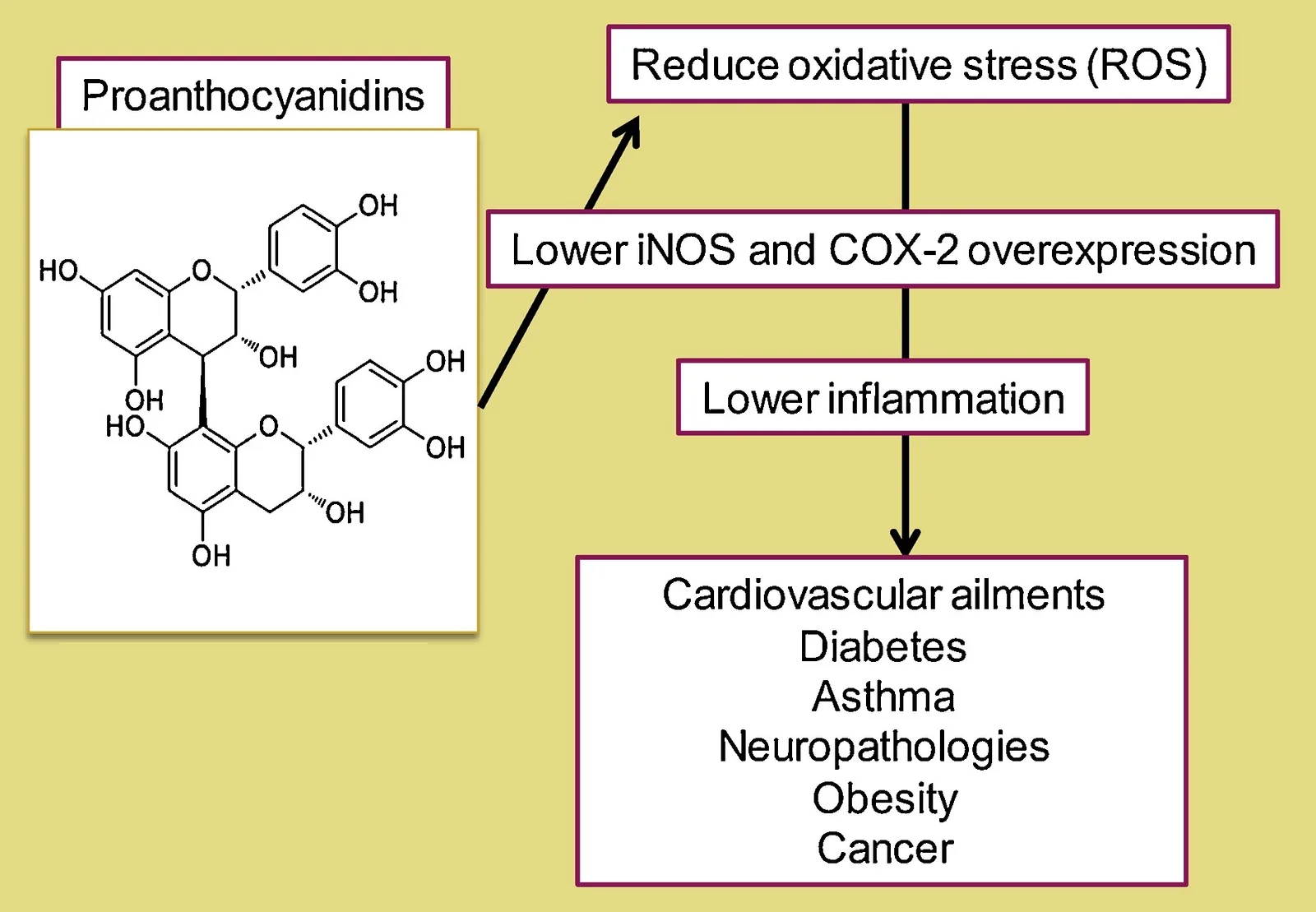
Therapeutic potential of proanthocyanidin compounds.8
Literature Study:
Subjects: 40 female volleyball players, adult age
Dosage: Grape seed extract 600 mg/day
Duration: 8 weeks
Result: increased rate glutathione (GSH) in the blood and a decrease in the oxidative marker malondialdehyde (MDA).4
Heart Health
Grape seed extract (GSE) is beneficial for cardiovascular health, primarily due to its powerful antioxidant properties. This extract neutralizes harmful free radicals that can damage blood vessels and heart tissue. Additionally, grape seeds help lower blood pressure by increasing nitric oxide production, which relaxes and dilates blood vessels, thereby improving circulation.5Literature Study:
There is a meta-analysis study involving 16 clinical trials.
Subjects: 30 people aged 40–64 years with prehypertension
Research dose: Grape seed extract 200mg or 400mg/day (standardized proanthocyanidins 85%)
Duration: 12 weeks
Results: In the 400mg group, systolic blood pressure decreased by approximately 13 mmHg, and arterial stiffness and arterial elasticity parameters improved compared to placebo.5
Safety
Grape extract has been recognized as generally safe (GRAS) by the Food and Drug Administration (FDA). According to the results of a literature review, the No Observed Adverse Effect Level (NOAEL) of grape seed extract determined in rats was 1.78 g/kg body weight per day.6
Keywords: Grape Seeds; Vitis vinifer; Proanthocyanidins; Antioxidants; Heart Health
References
Image: Vecteezy.com
Unusan N. Proanthocyanidins in grape seeds: An updated review of their health benefits and potential uses in the food industry. Journal of Functional Foods. 2020;67:103861.
Nada SA, El-Shamarka ME, Omara EA, Abdel-Salam OM. Grape seed extract and vitamin c combination blocked LPS-induced multiple organ toxicity in mice. Reactive Oxygen Species. 2019;7(21):161-75.
Taghizadeh M, Malekian E, Memarzadeh MR, Mohammadi AA, Asemi Z. Grape Seed Extract Supplementation and the Effects on the Biomarkers of Oxidative Stress and Metabolic Profiles in Female Volleyball Players: A Randomized, Double-Blind, Placebo-Controlled Clinical Trial. Iran Red Crescent Med J. 2016;18(9):e31314. doi:10.5812/ircmj.31314
Odai T, Terauchi M, Kato K, Hirose A, Miyasaka N. Effects of Grape Seed Proanthocyanidin Extract on Vascular Endothelial Function in Participants with Prehypertension: A Randomized, Double-Blind, Placebo-Controlled Study. Nutrients. 2019;11(12):2844. doi:10.3390/nu11122844
Ma ZF, Zhang H. Phytochemical Constituents, Health Benefits, and Industrial Applications of Grape Seeds: A Mini-Review. Antioxidants (Basel). 2017; 6(3): 71. doi:10.3390/antiox6030071
Ma ZF, Zhang H. Phytochemical Constituents, Health Benefits, and Industrial Applications of Grape Seeds: A Mini-Review. Antioxidants (Basel). 2017;6(3):71. doi:10.3390/antiox6030071.
Rauf A, Imran M, Abu-Izneid T, et al. Proanthocyanidins: A comprehensive review. Biomed Pharmacother. 2019;116:108999. doi:10.1016/j.biopha.2019.108999.
Ketsa S, Verheij EWM. Vitis vinifera L. In: Verheij EWM, Coronel RE, eds. Plant Resources of South-East Asia No. 2: Edible Fruits and Nuts. PROSEA Foundation; 1991. Accessed April 7, 2026. http://prota4u.org/prosea.
US Department of Health and Human Services. Herbs at a glance; Grape Seed Extract. US Department of Health and Human Services; 2012. Accessed April 12, 2026. www.ncbi.nlm.nih.gov/sites/entrez