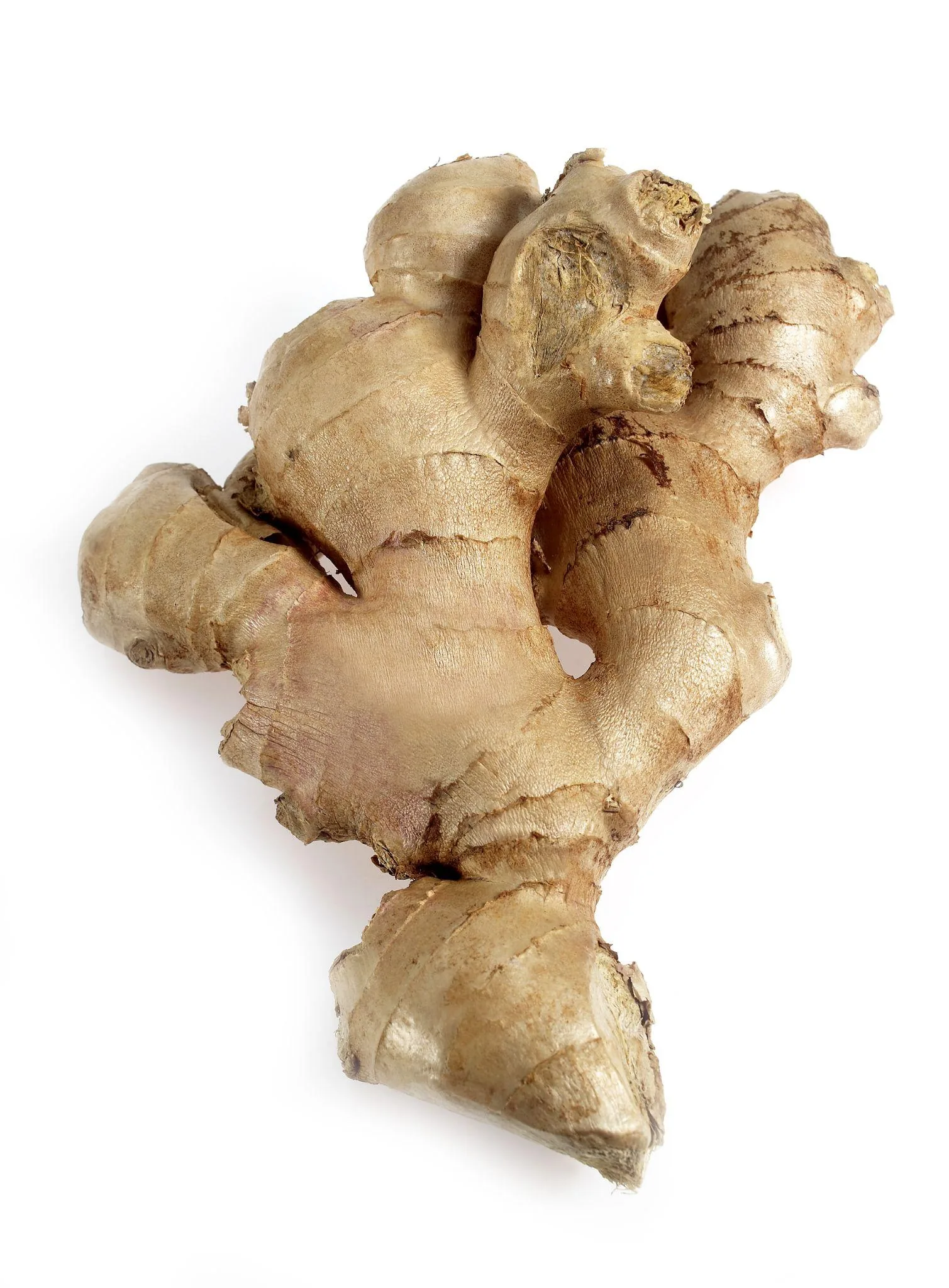
Ginger rhizome10
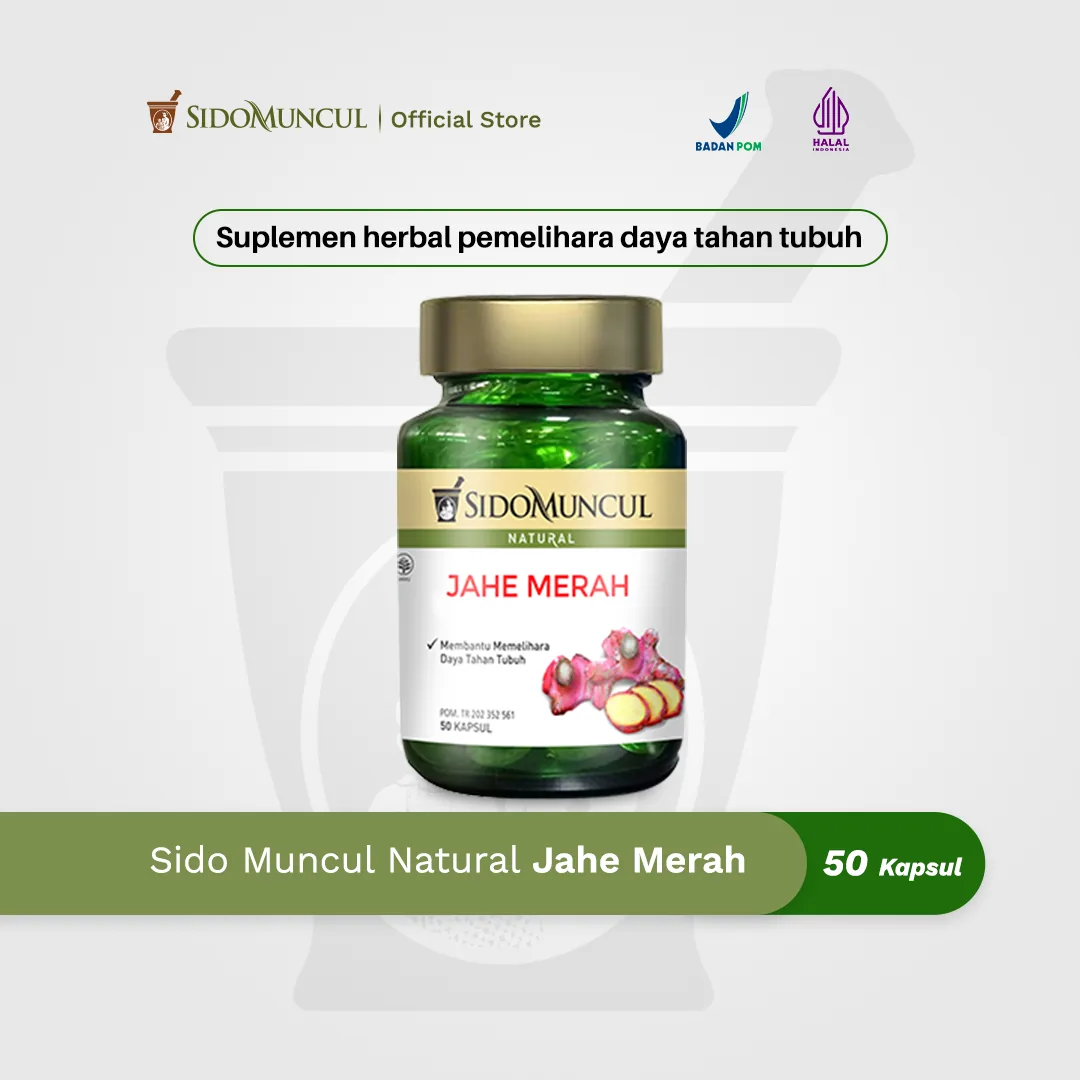
Zingiber officinale (ginger) originated in India and was introduced to Europe by Arab traders as a herbal spice. In Asia, ginger rhizomes have long been used as herbal medicine. Traditionally, ginger is used to treat digestive issues, colds, flu, pain, and headaches.1 In Indonesia, there are three commonly cultivated varieties of ginger: Elephant Ginger, Emprit Ginger, and Red Ginger.
Morphology of Ginger
The rhizome is slightly flat, with split ends; the branches are short and flat, inverted egg-shaped, and each branch tip has an inward-curving groove. The outer surface is yellowish-brown, with longitudinal grooves, and occasionally contains free fibers.8
Ginger Active Compounds
Ginger rhizomes contain beneficial active components, such as volatile oils (1–3%)—with zingiberene as the primary compound—and oleoresins (4–7.5%)—with gingerol and shogaols as the main compounds.1 Shogaols are formed from gingerol when ginger is dried or heated, contributing to its spicy flavor and medicinal properties.3
Red ginger contains higher levels of gingerol and shogaol than other types of ginger varieties. These two compounds contribute to its spicy flavor and health benefits.4 Ginger is effective in relieving various health problems such as relieving pain, dizziness, and digestive problems such as nausea, vomiting, dyspepsia.2
Health Benefits of Ginger
Digestive Health
Ginger is considered beneficial for various digestive disorders, including nausea, gas, bloating, and cramps. Ginger enhances the rate of gastric emptying and promotes the absorption of nutrients from the digestive tract. Ginger’s anti-nausea effects are derived from its ability to regulate digestion, such as by stimulating the flow of saliva and bile.1Literature study:
Subjects: 52 RRMS patients (Relapsing Remitting Multiple Sclerosis) age 18-50 years old
Research dose: Ginger extract 3 x 500 mg per day
Duration: 12 weeks
Results: Ginger consumption can improve constipation, nausea, bloating, and abdominal pain in research subjects.
Anti-inflammatory, pain relief, and muscle aches
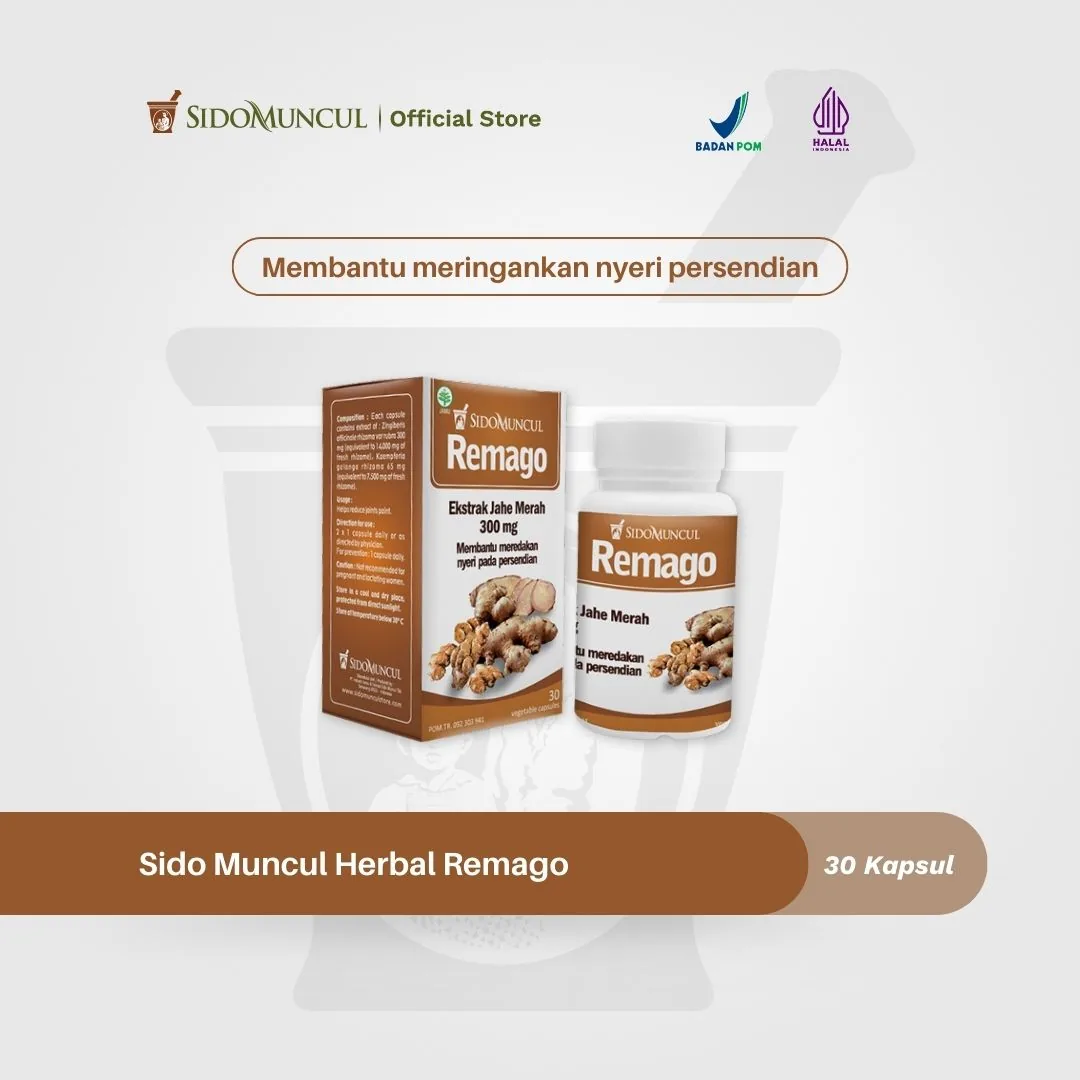
Muscle aches and joint pain are generally symptoms caused by inflammation in the body. Active compounds such as gingerols and shogaols in ginger help reduce inflammation by inhibiting the pathways and mediators that trigger inflammation in the body. This mechanism reduces inflammation and pain signals, thereby relieving joint pain and stiffness.5
The mechanism of action of ginger for osteoarthritis/joint inflammation.9
Literature study:
The systematic review included 7 studies examining the effects of ginger on pain, as follows:
Subjects: 481 participants aged 19–75 years with a history of knee pain, rheumatoid arthritis, osteoarthritis, menstrual pain, and diabetic neuropathy
Research dose: 1-2 g/day Ginger powder or 30-500 mg/day of Ginger extract
Duration: 6-12 weeks
Results: Ginger has a significant effect on reducing pain symptoms in various conditions such as arthritis / joint inflammation, menstrual pain & diabetic neuropathy.5
Maintaining body immunity
Ginger has the potential to act as a natural immunomodulator, meaning it can regulate the immune system through its antioxidant and anti-inflammatory properties, or by balancing the body’s innate and adaptive immune response. The active compounds in ginger have antioxidant and anti-inflammatory effects that protecting cells from damage and reducing inflammation.6Literature study:
Subjects: 22 inpatients with Covid-19
Research dosage: Ginger Extract 500 mg/day and Propolis 1,000 mg/day
Duration: 3 months
Results: Consumption of ginger extract plus propolis can alleviate the clinical symptoms of COVID-19, particularly by improving oxygen saturation. Furthermore, ginger extract and propolis can restore blood lymphocyte and platelet counts to normal function. Lymphocytes (white blood cells) play a role in the immune system; if their levels are too high or too low, it can trigger the onset of various diseases.7
Migraine
The anti-inflammatory activity of ginger can also help relieve headaches and migraines.11
Subjects: 60 patients with episodic migraine
Dosage: 400 mg ginger extract (5% gingerol) combined with 100 mg ketoprofen (intravenous) during an episode.
Duration: acute (evaluated up to 2 hours)
Results: The combination of ginger and nonsteroidal anti-inflammatory drugs may contribute to the treatment of migraine attacks. Patients who took ginger showed a significantly better clinical response within 1 hour after administration, compared to placebo. Ginger administration improved pain relief and functional status in migraine patients.11
Safety
Ginger is listed in the Formularium Obat Herbal Asli Indonesia (Permenkes RI No. 6 Th. 2016) with the indications of Antiemetic (anti-nausea and anti-vomiting), Gastritis (gastric inflammation), and Arthritis (joint inflammation). Ginger is considered a safe herb and does not cause teratogenic effects in pregnant women; however, large doses (more than 6 g of dried ginger powder) may cause stomach irritation, so avoid consuming large doses on an empty stomach.8
Keywords: Ginger; Zingiber officinale; Gingerol; Shogaol; Anti-inflammatory; Pain-relieving; Digestive; Anti-nausea; Cough and Cold; Migraine
References
Chevallier A. Encyclopedia of Herbal Medicine. 3rd ed. DK Publishing; 2016. ISBN: 978-1-4654-4981-8.
Heber, D, Joerg G, Thomas B, Christof J. Physicians Desk Reference (PDR) for Herbal Medicines. 4th edition. Thomson Healthcare; 2007. ISBN 1-56363-678-6.
Ghasemzadeh A, Jaafar HZE, Baghdadi A, Tayebi-Meigooni A. Formation of 6-, 8- and 10-Shogaol in Ginger through Application of Different Drying Methods: Altered Antioxidant and Antimicrobial Activity. Molecules. 2018;23(7):1646. doi:10.3390/molecules23071646
Zhang S, Kou X, Zhao H, Mak KK, Balijepalli MK, Pichika MR. Zingiber officinale var. rubrum: Red Ginger's Medicinal Uses. Molecules. 2022;27(3):775. doi:10.3390/molecules27030775.
Terry R, et al. The use of ginger (Zingiber officinale) for the treatment of pain: a systematic review of clinical trials. Pain Med. 2011; 12(12): 1808-1818. doi:10.1111/j.1526-4637.2011.01261.x.
Ayustaningwarno F, Anjani G, Ayu AM, Fogliano V. A critical review of Ginger’s (Zingiber officinale) antioxidant, anti-inflammatory, and immunomodulatory activities. Front Nutr. 2024; 11:1364836. doi: 10.3389/fnut.2024.1364836.
Yudhani RD, Suselo YH, Rahayu D, Aphridasari J. The Effects of Zingiber Officinale and Propolis Supplementation on Hospitalized Covid-19 Patients' Oxygen Saturation and Hematology Profiles. Indonesian Journal of Pharmacy. 2023; 34(3): 499–509.
Kementerian Kesehatan Republik Indonesia. Peraturan Menteri Kesehatan Republik Indonesia Nomor 6 Tahun 2016 tentang Formularium Obat Herbal Asli Indonesia. Kementerian Kesehatan RI; 2016.
Szymczak J, Grygiel-Górniak B, Cielecka-Piontek J. Zingiber Officinale Roscoe: The Antiarthritic Potential of a Popular Spice—Preclinical and Clinical Evidence. Nutrients. 2024; 16(5):741.
Image: shutterstock.com
Martins LB, Rodrigues AMDS, Rodrigues DF, Dos Santos LC, Teixeira AL, Ferreira AVM. Double-blind placebo-controlled randomized clinical trial of ginger (Zingiber officinale Rosc.) addition in migraine acute treatment. Cephalalgia. 2019; 39(1): 68-76. doi:10.1177/0333102418776016.