Garlic1
Garlic (Allium sativum) is one of the oldest cultivated plants. For over 4,000 years, Garlic has been used as a spice, food, and traditional medicine. Egyptian healers in 1550 BC recommended Garlic to treat health problems.2 In traditional Indonesian medicine, Garlic is commonly used to lower blood lipid levels, reduce high blood pressure, treat parasitic infections, coughs, shortness of breath, colds, headaches, and lower back pain.4
Morphology of Garlic
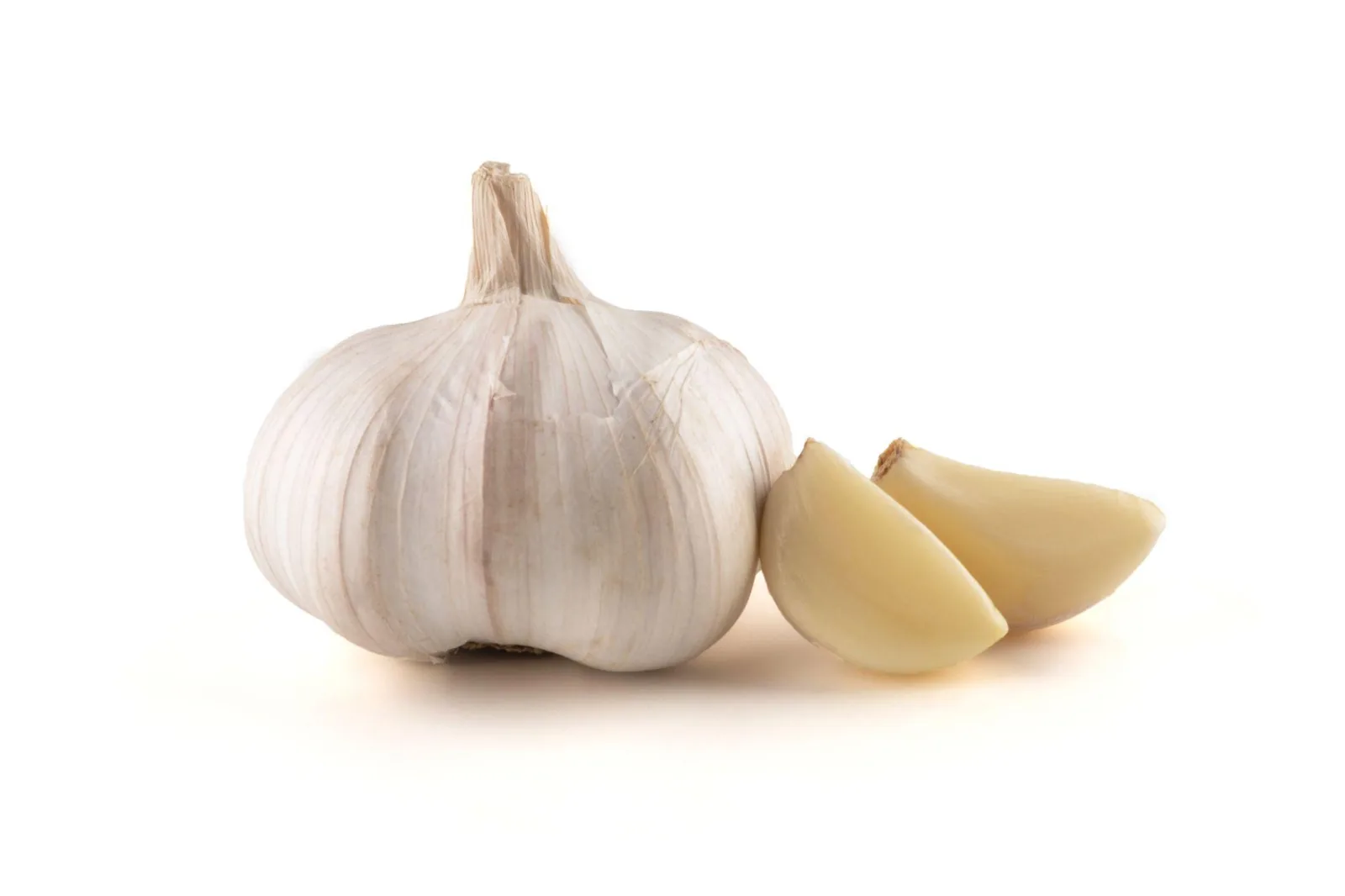
The Garlic plant is an annual herb, growing 30–60 cm tall. The part of the plant used is the bulb, which has a distinctive odor when crushed.4 The bulb is a compound, nearly round, with a diameter of 4–6 cm, consisting of 8–20 cloves entirely covered by 3–5 thin, paper-like white membranes; each clove is enveloped by 2 paper-like membranes, with the outer membrane being slightly white and somewhat loose.6
Garlic Active Compounds
Garlic contains the bioactive compound Allicin which has anti-inflammatory and antioxidant properties, and is responsible for most of its health benefits. This compound is released when garlic is damaged—for example, when it is crushed, sliced, chopped, or chewed.3
Health Benefits of Garlic
Antihypertensive
The allicin and phenolic compounds in Garlic work similarly to conventional antihypertensive drugs by inhibiting the angiotensin-converting enzyme. This inhibition causes blood vessels to relax and dilate, reducing blood volume. Consequently, the heart pumps blood more easily, lowering blood pressure.5Literature Study:
There is a systematic review including 18 studies examining the antihypertensive effects of garlic is as follows:
Subjects: 735 people (systolic blood pressure group) & 799 people (diastolic blood pressure group)
Research dose: 300-2,400 mg/day (Garlic Powder/Extract)
Duration: 2-24 weeks
Results: Consumption of Garlic powder/extract had a significant antihypertensive effect compared to the control group in lowering blood pressure. In both the hypertensive and normotensive groups given Garlic extract, a reduction in systolic and diastolic blood pressure of 3.75 and 3.39 mmHg, respectively was observed. Meanwhile, in the hypertensive group alone, a reduction in systolic blood pressure of 4.4 mmHg was observed.4
Anti-cholesterol / Reduces cholesterol
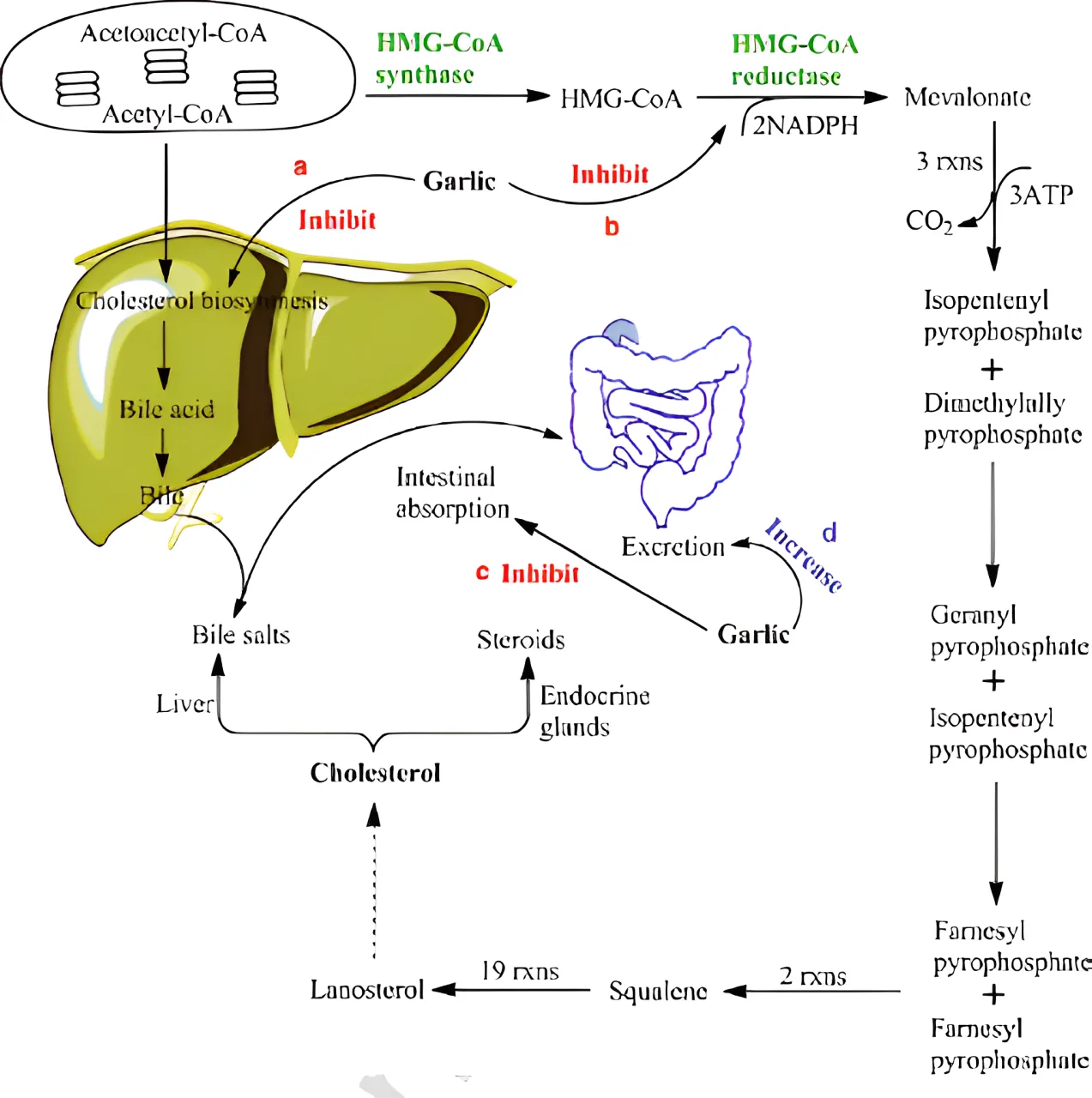
Hypolipidemic mechanism of Garlic.3
There are several possible mechanisms by which Garlic acts as an anti-cholesterol agent. These include reducing cholesterol absorption in the intestine, inhibiting enzymes involved in cholesterol production, and increasing cholesterol excretion. In various studies, Garlic has been shown to lower total cholesterol (TC), LDL-C, and triglycerides (TG), as well as increase HDL-C levels.3
Literature Study:
There is a systematic review including 39 studies that examined the anticholesterol effects Garlic as follows:
Subjects: 2,298 individuals aged 20-90 years with a history of high cholesterol
Research dose:
Powder: 600–5,600 mg/day
Oil: 9–18 mg/day
Extract: 1,000–7,200 mg/day
Fresh Garlic: 4–10 g/day
Duration: 2 months
Results: Garlic significantly reduced serum total cholesterol (TC) levels by 17±6 mg/dL and LDL-C by 9±6 mg/dL, while slightly increasing HDL-C levels in patients with high total cholesterol (200 mg/dL). Garlic was well-tolerated in all clinical trials with minimal side effects.4
Maintaining Heart Health
Garlic has several effects that can help maintain heart health and alleviate the heart’s workload, including: Antioxidant effects to prevent excessive free radical production, prevent vascular inflammation, reduce cholesterol levels to prevent plaque formation, and inhibit platelet aggregation that can cause blockages in blood vessels.3
Safety
In human trials, garlic has been proven to be effective and safe. Garlic is included in the Indonesian Herbal Medicine Formulary [Regulation of the Minister of Health of the Republic of Indonesia No. 6 of 2016] with indications for dyslipidemia and cardiovascular disease.6
Garlic is considered to have low toxicity and is listed as Generally Recognized as Safe (GRAS) by the FDA. In high doses, it may cause stomach irritation in sensitive individuals. Garlic consumption enhances the pharmacological effects of anticoagulants (warfarin, fluindione) but reduces the efficacy of the anti-AIDS drug saquinavir.3
Keywords: Garlic; Allium sativum; Allicin; Antihypertensive; Blood Pressure; Cholesterol-Lowering; Anti-Cholesterol; Heart Health; Cough; Shortness of Breath.
References
Image: Vecteezy.com
Bazaraliyeva A, Moldashov D, Turgumbayeva A, Kartbayeva E, Kalykova A, Sarsenova L, Issayeva R. Chemical and biological properties of bio-active compounds from Garlic (Allium sativum). Pharmacia. 2022; 69: 955-64.
Omar S. Garlic and cardiovascular diseases. InNatural products: phytochemistry, botany and metabolism of alkaloids, pehnolics and terpenes. Springer. 2013: 3661-3696. doi:10.1007/978-3-642-22144-6_158.
National Agency of Drug and Food Control. The Power of Indonesian Medicine Series: Garlic (Allium sativum L.). Badan POM; 2016. ISBN : 978-602-7899-36-0.
Wang HP, Yang J, Qin LQ, Yang XJ. Effect of Garlic on blood pressure: a meta-analysis. J Clin Hypertens (Greenwich). 2015;17(3): 223-231. doi:10.1111/jch.12473.
Ministry of Health of the Republic of Indonesia.Regulation of the Minister of Health of the Republic of Indonesia Number 6 of 2016 concerning the Formulary of Original Indonesian Herbal Medicines. Ministry of Health of the Republic of Indonesia; 2016.