
Bilberry1
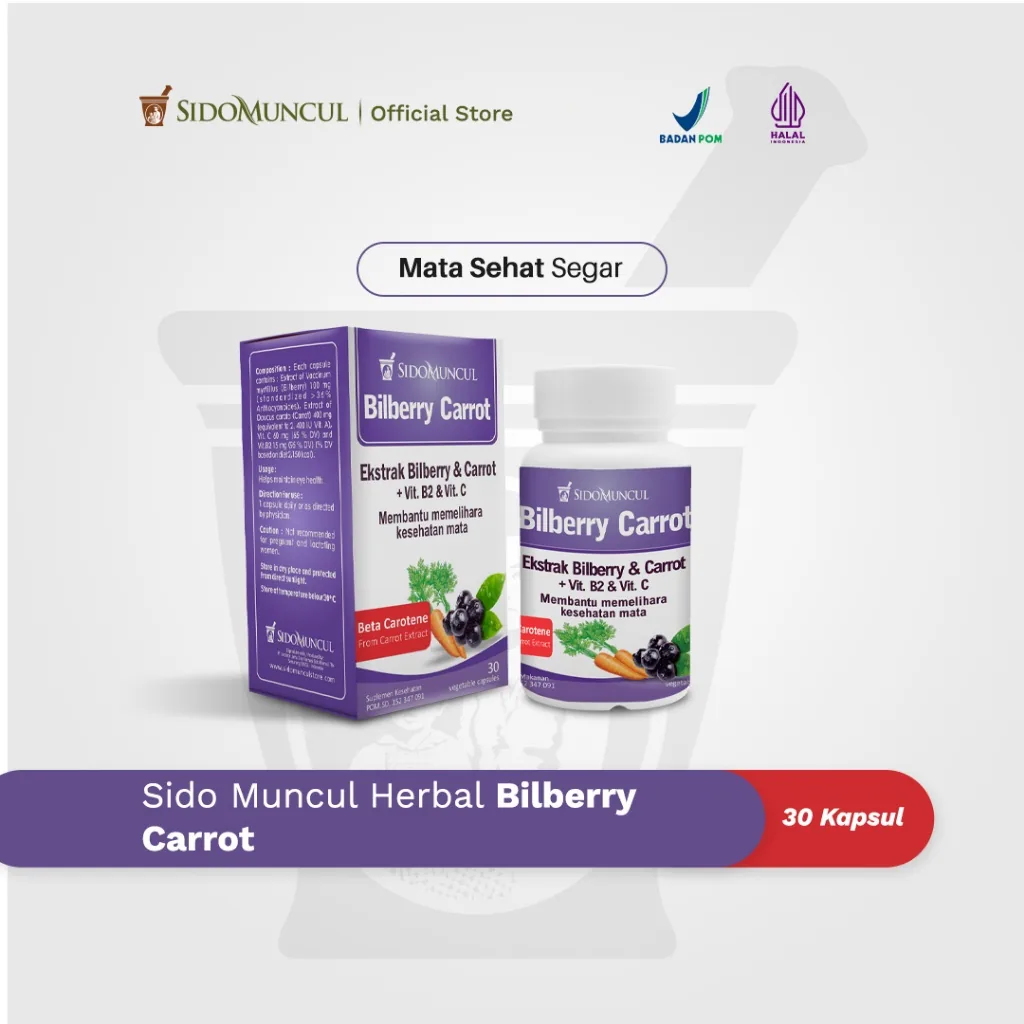
Vaccinium myrtillus or Bilberries belong to the same family as blueberries. After British fighter pilots discovered that their vision improved when they ate bilberry jam, research into this plant began, revealing its benefits for eye health.4 According to the Egyptian Pharmacopoeia, bilberries are effective in relieving mild diarrhea, varicose veins, impaired ocular microcirculation, and diabetic retinopathy.6
Morphology of Bilberry
The Bilberry is a small deciduous shrub with slender branches that grow from creeping rhizomes. Its leaves are bright green, and its berries are bluish-black, round, with purple flesh and reddish-brown seeds, and are sometimes covered with a grayish coating. Bilberry berries grow singly in the axils of the lowest leaves on vegetative shoots.5
Bilberry Active Compounds
Contains the bioactive compound anthocyanin, which consists of a combination of five types of aglycones and three types of monosaccharides.2
Health Benefits of Bilberry
The anthocyanins in bilberry extract are highly water-soluble antioxidants with a flavanone structure, which is commonly found in eye tissue. These compounds can cross the blood-retinal barrier to help relieve eye strain and reduce eye fatigue. Additionally, anthocyanins protect nerve cells in the retina by suppressing inflammation caused by oxidative stress.3
Literature Study:
Subjects: 109 healthy adult men and women aged 20–60 years.
Research dose: 240 mg Bilberry Extract / day
Duration: 12 weeks
Results: There was a reduction in eye fatigue and eye muscle contractions caused by Visual Display Terminal (VDT) strain. VDT strain has a negative impact on eye function, leading to dry eyes, eye fatigue, and blurred vision, which affect quality of life.2
Safety
Bilberry is generally safe for most people to consume as a supplement or tea in moderate amounts. Clinical studies have not shown any changes in urine, blood, or biochemical parameters. Side effects are usually mild, such as digestive upset in some people.2
Keywords: Bilberry; Vaccinium myrtillus; Anthocyanin; Varicose Veins; Eye Health; Eye Strain; Diabetic Retinopathy.
References
Image: freepik.com
Kosehira M, Machida N, Kitaichi N. A 12-Week-Long Intake of Bilberry Extract (Vaccinium myrtillus L.) Improved Objective Findings of Ciliary Muscle Contraction of the Eye: A Randomized, Double-Blind, Placebo-Controlled, Parallel-Group Comparison Trial. Nutrients. 2020;12(3):600. Published 2020 Feb 25. doi:10.3390/nu12030600.
Miyake S, Takahashi N, Sasaki M, Kobayashi S, Tsubota K, Ozawa Y. Vision preservation during retinal inflammation by anthocyanin-rich Bilberry extract: cellular and molecular mechanism. Lab Invest. 2012;92(1):102-109. doi:10.1038/labinvest.2011.132.
Vaneková Z, Rollinger JM. Bilberries: Curative and Miraculous - A Review on Bioactive Constituents and Clinical Research. Front Pharmacol. 2022;13:909914. doi:10.3389/fphar.2022.909914.
Padmanabhan P, Correa-Betanzo J, Paliyath G. Berries and Related Fruits. Encyclopedia of Food and Health; 2016: 364-371. Accessed April 10, 2026. https://doi.org/10.1016/B978-0-12-384947-2.00060-X.