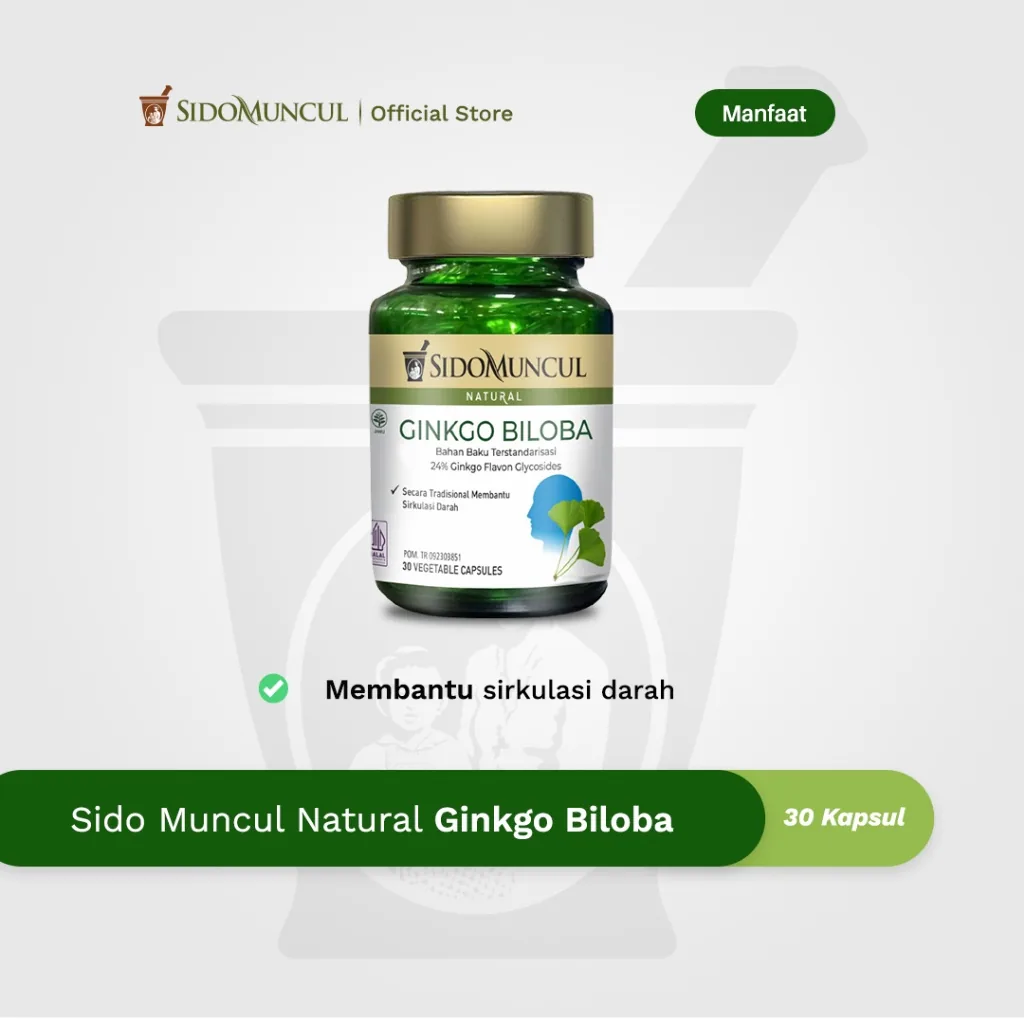
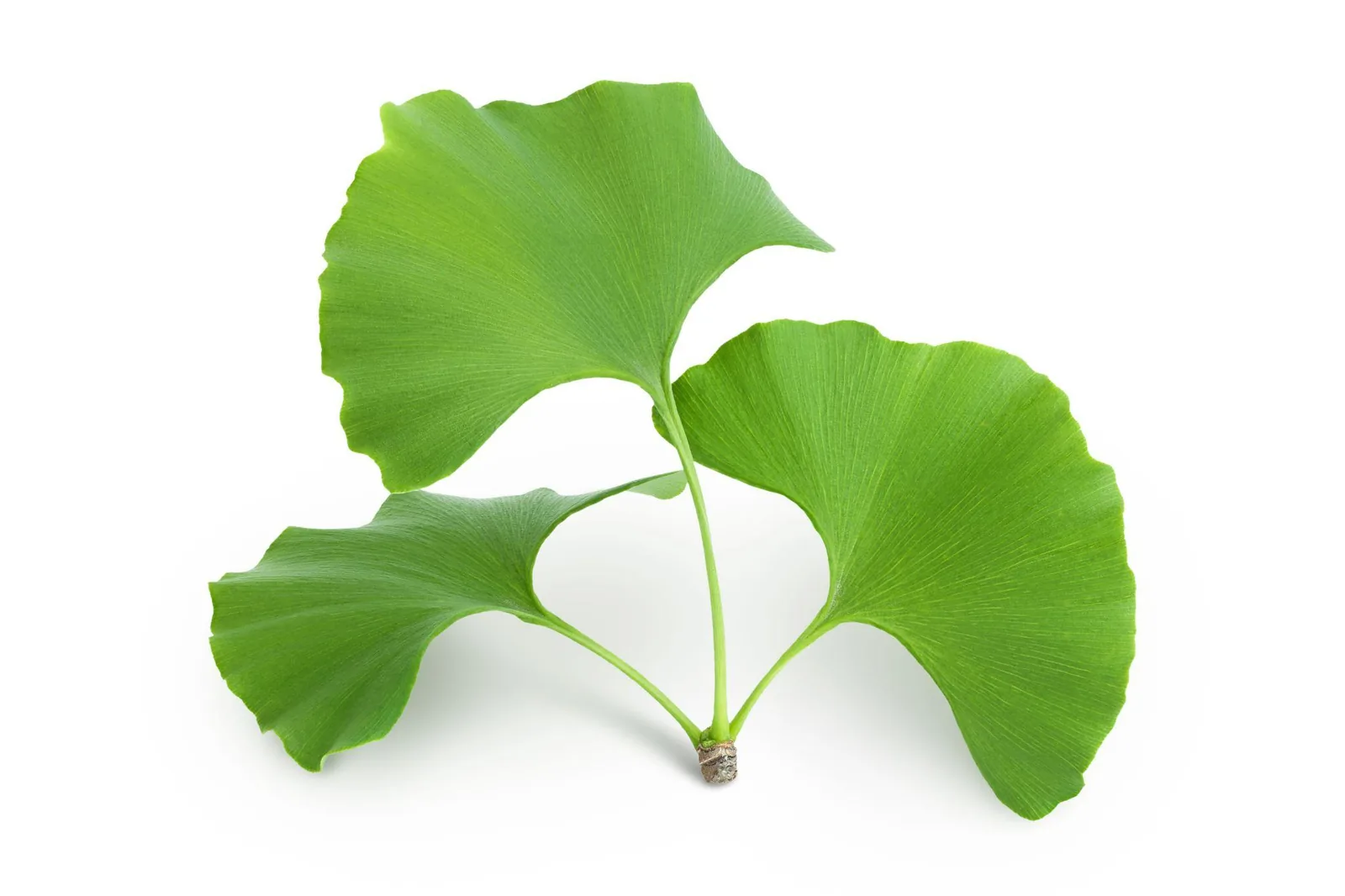
Leaf Ginkgo biloba1
Ginkgo biloba is widely found in China, Japan, and Korea. Ginkgo is one of the oldest plant species, having existed for 190 million years. The part most commonly used in herbal medicine is the leaf. In traditional Chinese medicine, Ginkgo is used to treat angina and poor blood circulation. Additionally, in Western countries, Ginkgo is widely used to improve brain function and reduce the risk of stroke.2
Morphology of Ginkgo biloba
Ginkgo biloba leaves are green to yellowish-green, with the upper surface slightly darker than the underside. The petioles are approximately 4–9 cm long, and the leaf blades measure about 4–10 cm; they are fan-shaped, usually with two lobes (split into two) or sometimes not split at all. Both the upper and lower surfaces of the leaf are smooth. The leaf margins have irregular indentations, giving them a wavy or asymmetrical appearance.6
Ginkgo biloba Active Compounds
The primary bioactive compounds in Ginkgo biloba consist of two major groups: flavonoids and terpene trilactones, specifically ginkgolides and bilobalides. These two groups are believed to be responsible for many of Ginkgo’s therapeutic effects, such as antioxidant, neuroprotective, and circulatory benefits.2
Health Benefits Ginkgo biloba
Blood Circulation
Ginkgo biloba’s role in blood circulation is primarily focused on microcirculation (circulation in small blood vessels), cerebral circulation, and peripheral circulation (to target organs such as the arms, legs, and skin). Ginkgo biloba supports blood circulation by: reducing red blood cell clumping, stimulating the blood vessel lining to release vasodilatory factors, and increasing blood flow in areas with poor circulation, thereby ensuring tissues receive more oxygen and nutrients.3Literature Study:
Subjects: 209 patients with cerebral insufficiency (impaired blood flow to the brain)
Research dose: Ginkgo biloba extract 150 mg/day
Duration: 12 weeks
Results: Significant improvements were observed after six weeks in forgetfulness, depression, and headaches. After 12 weeks, significant improvements were noted in memory lapses, difficulty concentrating, fatigue, lack of motivation, and tinnitus compared to placebo.4
Subjects: 60 patients with peripheral artery disease (leg pain while walking)
Research dose: Ginkgo extract 3 × 40 mg per day (total 120 mg/day).
Duration: 24 weeks.
Results: In the Ginkgo group, the pain-free walking distance increased by approximately 19 m after 8 weeks, 34 m after 16 weeks, and 41 m after 24 weeks.4
Brain Health
Ginkgo biloba may help improve brain function by reducing oxidative damage, thereby allowing brain cells to function more effectively. Ginkgo biloba can reduce the activity of an enzyme that damages brain cells (monoamine oxidase) and help protect important neurons from premature damage.3Literature Study:
Subjects: 410 patients with mild to moderate dementia
Research dose: 240 mg/day of Ginkgo biloba extract
Duration: 24 weeks
Results: There was an improvement in cognitive and neuropsychiatric test scores observed in the Ginkgo biloba treatment group. Therefore, it can be concluded that administration of Ginkgo biloba leaf extract can improve cognitive function and reduce neuropsychiatric symptoms in patients with dementia.5
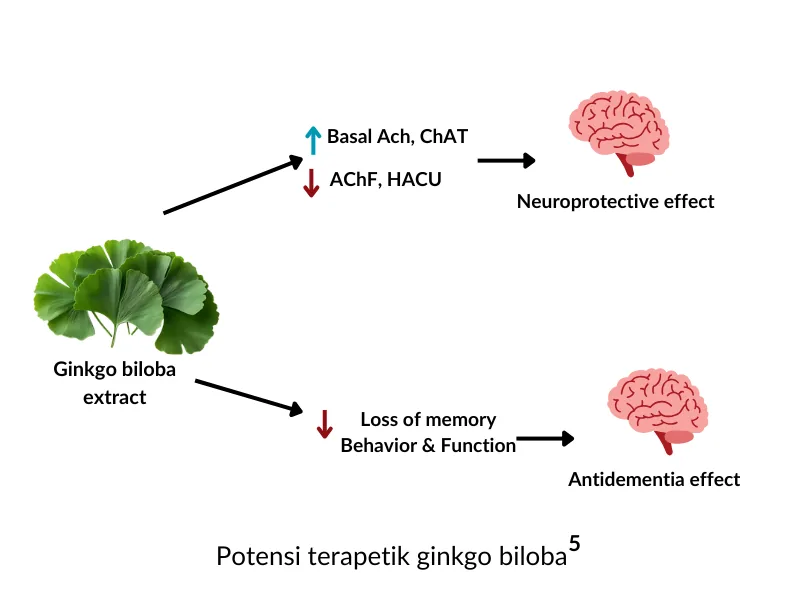
Therapeutic potential of Ginkgo biloba related to brain health.7
Safety
Based on literature review included in the European Medicines Agency (EMA) Assessment Report on Ginkgo biloba, there were no significant differences in the incidence of side effects between the Ginkgo biloba treatment group and the placebo group.6 The most common side effects were nausea and dizziness.4 In certain cases, there is a risk of bleeding, particularly when taken with anticoagulant medications such as warfarin. In general, Ginkgo biloba is considered safe when used in accordance with therapeutic dosage recommendations.6
Keywords: Ginkgo biloba; Ginkgolides; Blood Circulation; Microcirculation; Brain Health; Anti-dementia; Headaches; Tinnitus
References
Image: shutterstock.com
Joerg G, Thomas B, Christof J. Physicians Desk Reference (PDR) for Herbal Medicines. 4th edition. Thomson Healthcare; 2007.
Shu Z, Sha AH, Shahen M, et al. Pharmacological uses of Ginkgo biloba extracts for cardiovascular disease and coronary heart diseases. International Journal of Pharmacology. 2019; 15(1):1-9.
Barret, Marilyn. The Handbook of Clinically Tested Herbal Remedies. Haworth Herbal Press; 2004. ISBN 0-7890-2723-2.
Ihl R, Bachinskaya N, Korczyn AD, et al. Efficacy and safety of a once-daily formulation of Ginkgo biloba extract EGb 761 in dementia with neuropsychiatric features: a randomized controlled trial. Int J Geriatr Psychiatry. 2011; 26: 1186-1194. doi: 10.1002/gps.2662.
European Medicines Agency. Assessment report on Ginkgo biloba L., folium. EMA; 2014. EMA/HMPC/321095/2012.
Noor-E-Tabassum, Das R, Lami MS, et al. Ginkgo biloba: A Treasure of Functional Phytochemicals with Multimedicinal Applications. Evid Based Complement Alternat Med. 2022: 8288818. doi:10.1155/2022/8288818