Black Pepper1
Piper nigrum L., is a plant that produces pepper. This plant originates from southwestern India and has now spread to tropical regions around the world. Pepper is obtained from the fruit harvested from plants that are at least 3 years old. Black pepper is picked from fruit that is not yet fully ripe, then sun-dried or dried so that the skin becomes wrinkled and deep black. White pepper, on the other hand, is made from ripe fruit that has had its skin removed before drying. Black pepper has a sharper aroma and a stronger spicy flavor than white pepper; it has long been used as a spice in seasonings and food preservatives.2
Morphology of Black Pepper
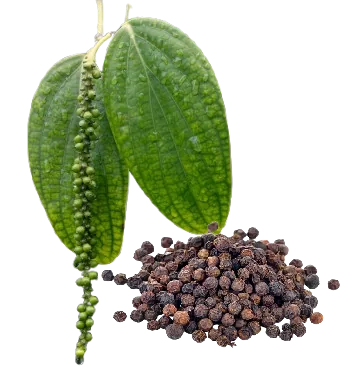
This plant is a woody vine that can grow to over 10 meters in height. It has strong, deep roots, with fibrous roots spreading through the topsoil. The leaves are simple, thick, glossy green on top and paler underneath, oval in shape with tapered tips. The flowers are arranged in long spikes and appear on the side branches. The fruit is small, round, green when unripe and red when ripe, and contains a single small seed inside.8
Black Pepper Active Compounds
Pepper contains essential oils, up to 9% alkaloids mainly piperine, about 11% protein, and small amounts of minerals.3
Health Benefits of Black Pepper
Piperine is the main bioactive compound in black pepper and is also responsible for its pungent taste. Pepper's distinctive pungency reflects its stimulant and antiseptic effects on the digestive tract and circulatory system. Black pepper is commonly consumed for its warming effect, digestive stimulant, and pain relief.3,5
Pain reliever
Subjects: rats (BW: 150-200 grams) and mice (BW: 25-30 grams)
Methods: Analgesic (pain relieving) activity tests were conducted using tail immersion, analgesiometer, hot plate, and acetic acid-induced writhing test.
Dosage: Piperine given at 5–15 mg/kg, while the hexane and ethanol extracts of Black Pepper were given at 10–15 mg/kg.
Duration: Effects were measured up to 120 minutes after administration.
Results: Piperine and Black Pepper extract reduced pain and reduced inflammation in experimental animals.4
Piperine as bioenhance experience
Black pepper contains piperine, which acts as a digestive stimulant by increasing the activity of digestive enzymes in the pancreas, such as fat-breaking enzymes. Besides its stimulant properties, piperine is also known as a bioavailability enhancer, helping the body better absorb drugs or other herbal compounds. Piperine works by accelerating intestinal absorption and slowing the breakdown of active substances in the liver, allowing more compounds to enter the bloodstream and retain them for longer. Because of these properties, piperine is often combined with herbal compounds with low bioavailability, such as turmeric (curcumin). However, caution should be exercised when taking certain medications, such as theophylline or phenytoin, as piperine can affect blood levels of these drugs.5
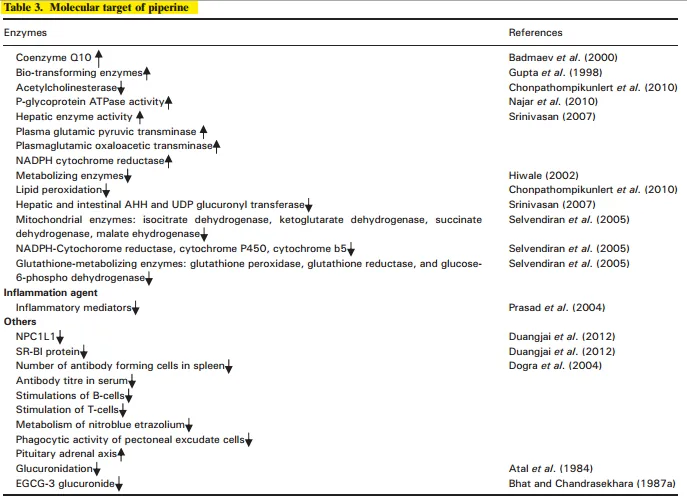
Table of piperine modulation on molecular targets and metabolic pathways of the body.5
Combination of Piperine and Curcumin
Subjects: 10 healthy male volunteers, aged 20 - 26 years, weighing 50—75 kg (mean 60 1.93)
Study doses: Curcumin 2 g/day compared with Curcumin 2 g/day plus piperine 20 mg/day
Duration:1 x administration (monitoring levels 6 hours after administration)
Results: Curcumin 2 g/day had very low to undetectable serum levels, while co-administration of piperine 20 mg/day resulted in much higher concentrations. The relative bioavailability of curcumin increased by 2,000% 45 minutes after oral administration of curcumin with piperine. Studies have shown that in the doses used, piperine can increase serum concentrations, absorption rates, and bioavailability of curcumin.6
Safety
Black pepper is a common food spice; its use in traditional medicine is relatively safe at recommended doses. In toxicity tests, oral administration of black pepper aqueous extract (5,000 mg/kg body weight) to rats did not produce any signs of toxicity. Furthermore, in subchronic toxicity tests, continuous oral consumption of up to 200 mg/kg body weight to rats for 90 days showed no abnormalities in the test group compared to the control group.7
Keywords: Piper nigrum; Black Pepper; Piperine; Pain Reliever; Bioenhancer
References
Image: vecteezy.com
Khan IA, Abourashed EA. Leung's Encyclopedia of Common Natural Ingredients: Used in Food, Drugs and Cosmetics. 3rd Edition. Wiley Publisher; 2014. ISBN 9881607418.
Chevallier A.Encyclopedia of Herbal Medicine. 3rd ed. DK Publishing; 2016. ISBN: 978-1-4654-4981-8.
Tasleem F, Azhar I, Ali SN, Perveen S, Mahmood ZA. Analgesic and anti-inflammatory activities of Piper nigrum L. Asian Pacific journal of tropical medicine. 2014;7:461-468. doi:10.1016/S1995-7645(14)60275-3.
Murlidhar M, Goswami TK.Piper nigrum and piperine: an update. Phytotherapy Research. 2013; 27(8): 1121-1130.
Shoba G, Joy D, Joseph T, Majeed M, Rajendran R, Srinivas PS. Influence of Piperine on the pharmacokinetics of curcumin in animals and human volunteers. Plant With. 1998; 64: 353-6.
Takooree H, Aumeeruddy MZ, Rengasamy KRR, et al. A systematic review on black pepper (Piper nigrum L.): from folk uses to pharmacological applications.Critical reviews in food science and nutrition. 2019; 59(1) ; 210-243. doi:10.1080/10408398.2019.1565489.